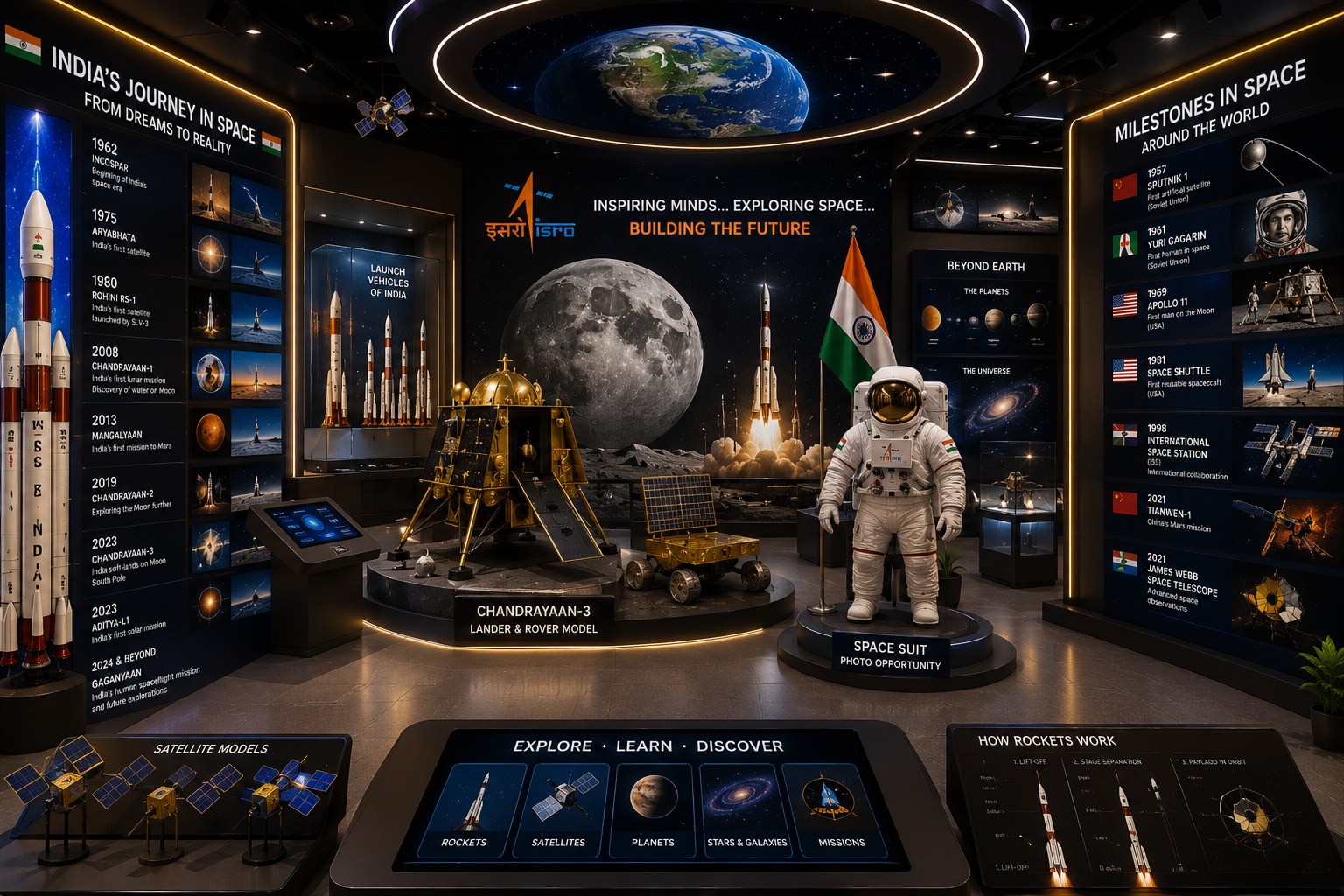
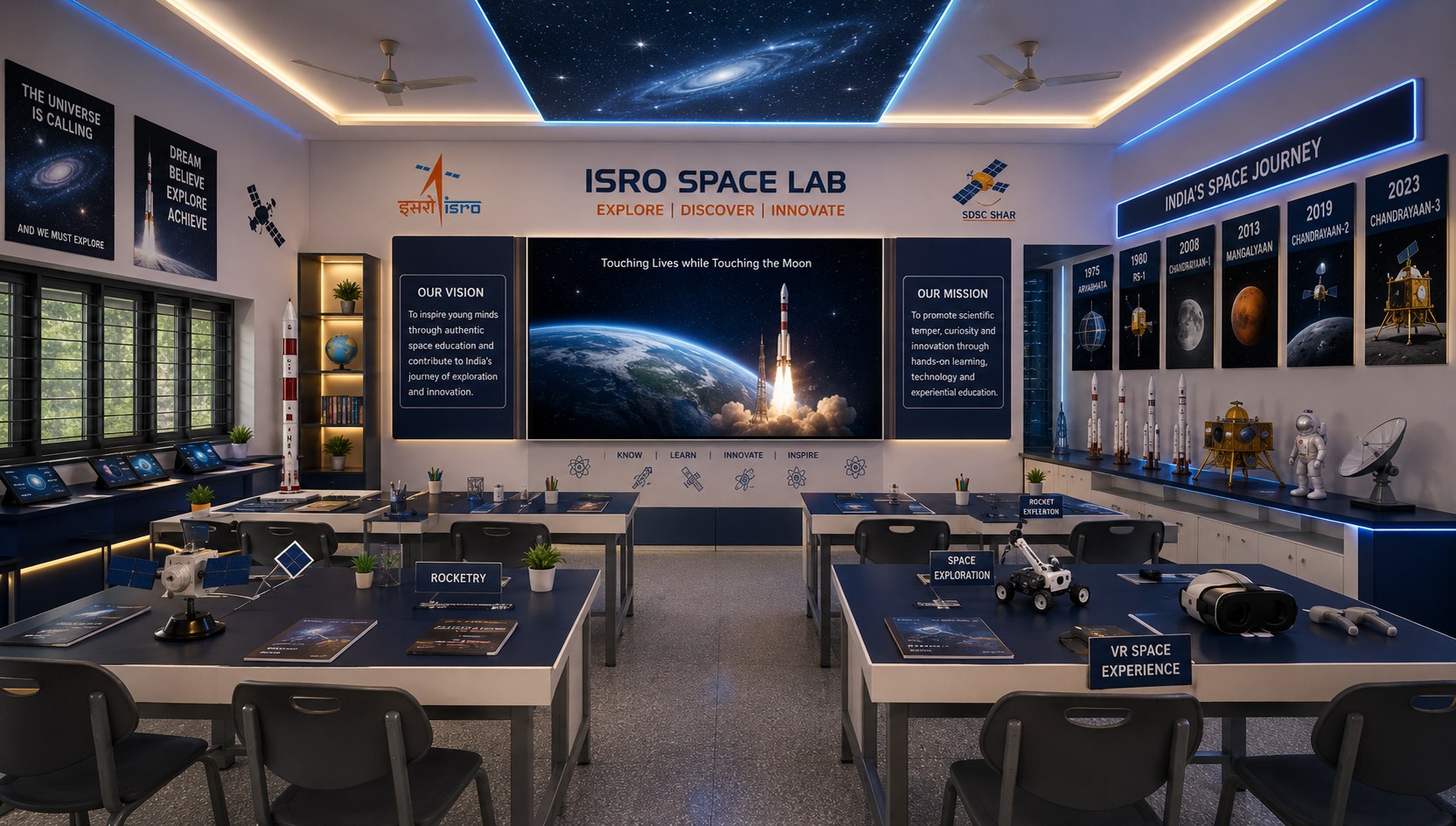
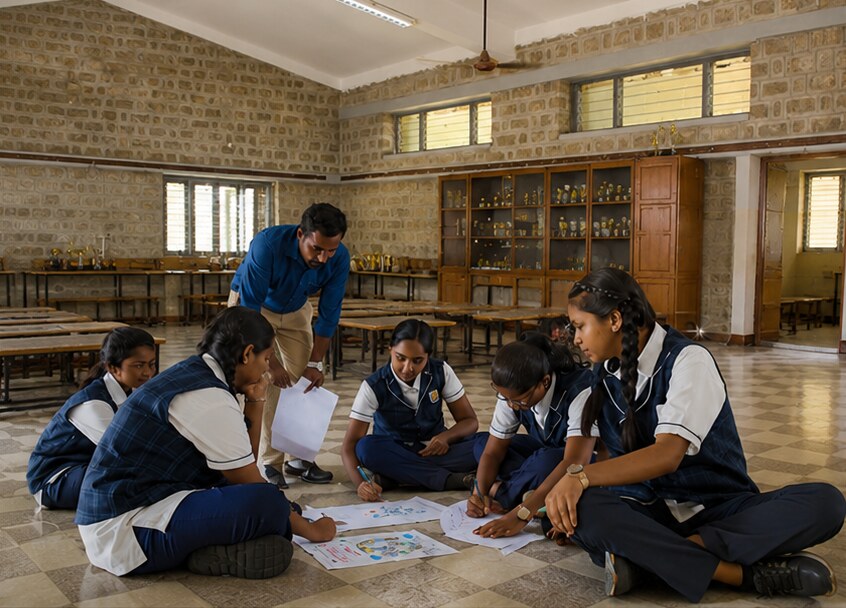
A dedicated ISRO branded space education classroom at the Centre of Excellence, bringing rocketry, satellite technology, and India's space journey to life for students of every grade.
The MMS journey into space education reflects a larger transformation taking place across Indian education. Over the past decade, schooling has been moving beyond the traditional classroom towards curiosity, experimentation and real-world problem solving, encouraged by initiatives such as the Atal Tinkering Labs under NITI Aayog's Atal Innovation Mission and the National Education Policy 2020. At the same time, India's rapidly growing space programme has brought space science closer to schools through student outreach initiatives, STEM programmes, YUVIKA, and the ISRO Space Tutor framework.
MMS began this journey early. From exploring astronomy at the Jawaharlal Nehru Planetarium in 2014, to experiencing the world of aviation at Taneja Aerospace and Aviation Limited (TALL), Hosur, in 2016, and later engaging with ISRO and the U R Rao Satellite Centre (URSC), MMS students have steadily moved from observing science to experiencing it first-hand.
Because the future of space exploration should not belong only to those who dream of reaching the stars, but to every child who is given the opportunity to explore them.
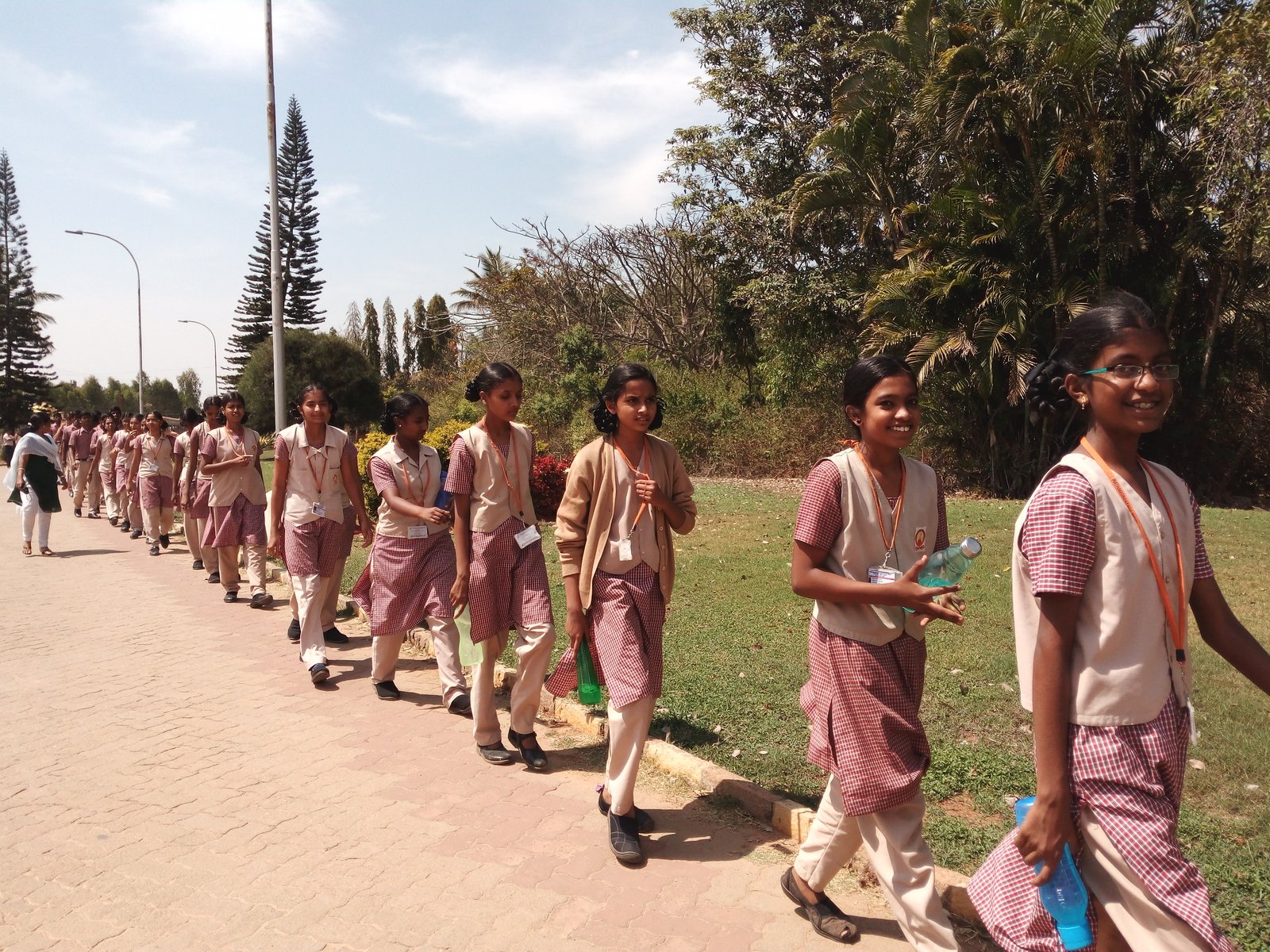
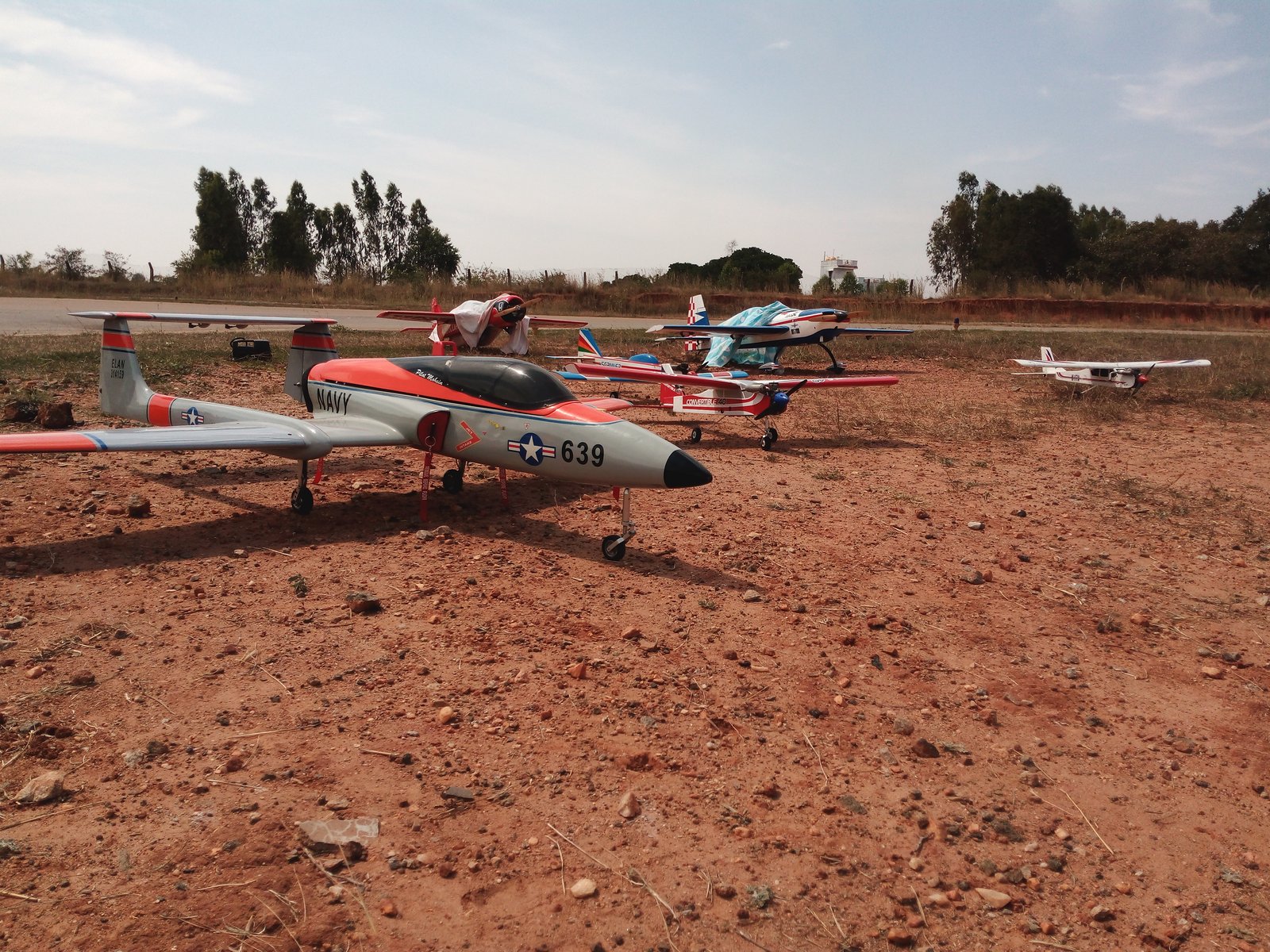
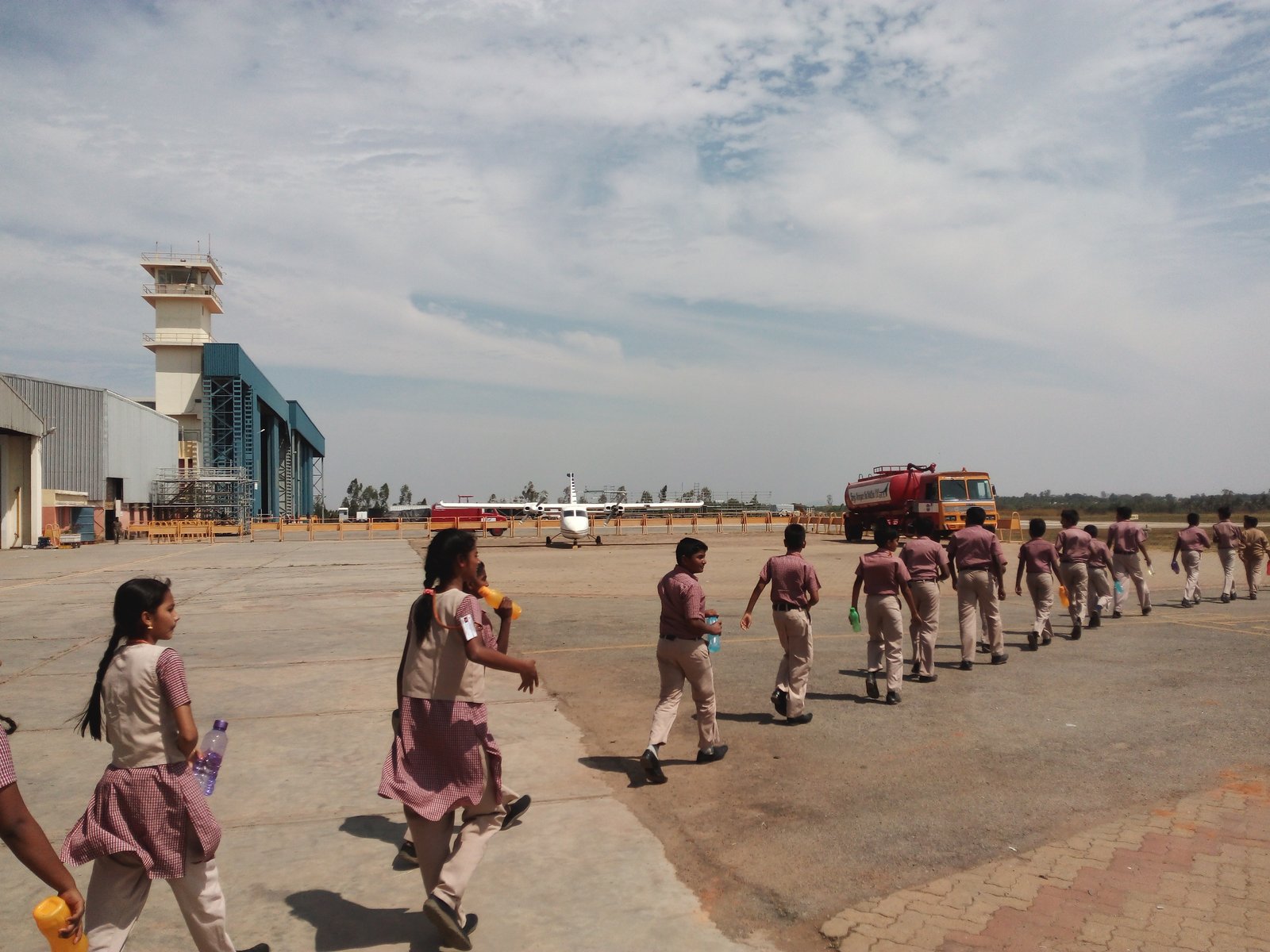
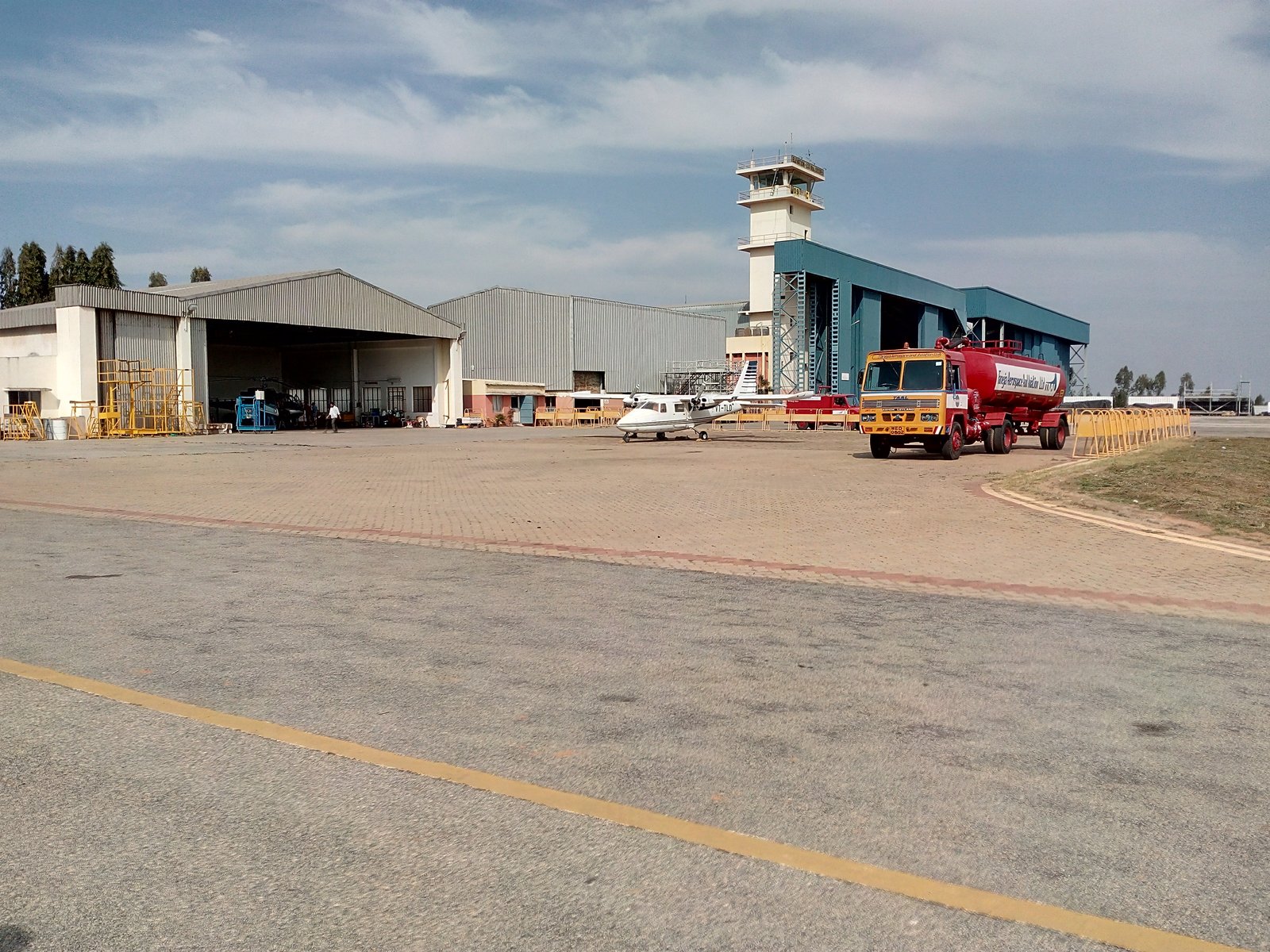
Today, the Space Lab represents the next chapter of that journey: a space where curiosity becomes exploration, exploration becomes experimentation, and experimentation can inspire innovation. The photos below are from a visit to TALL, Hosur Airdrome; photos from the ISRO Space Museum and Jawaharlal Nehru Planetarium visits are being added by MMS.



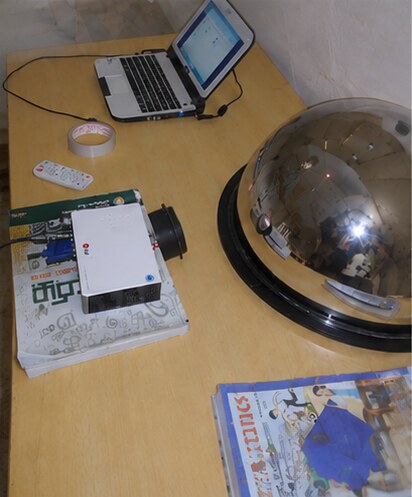
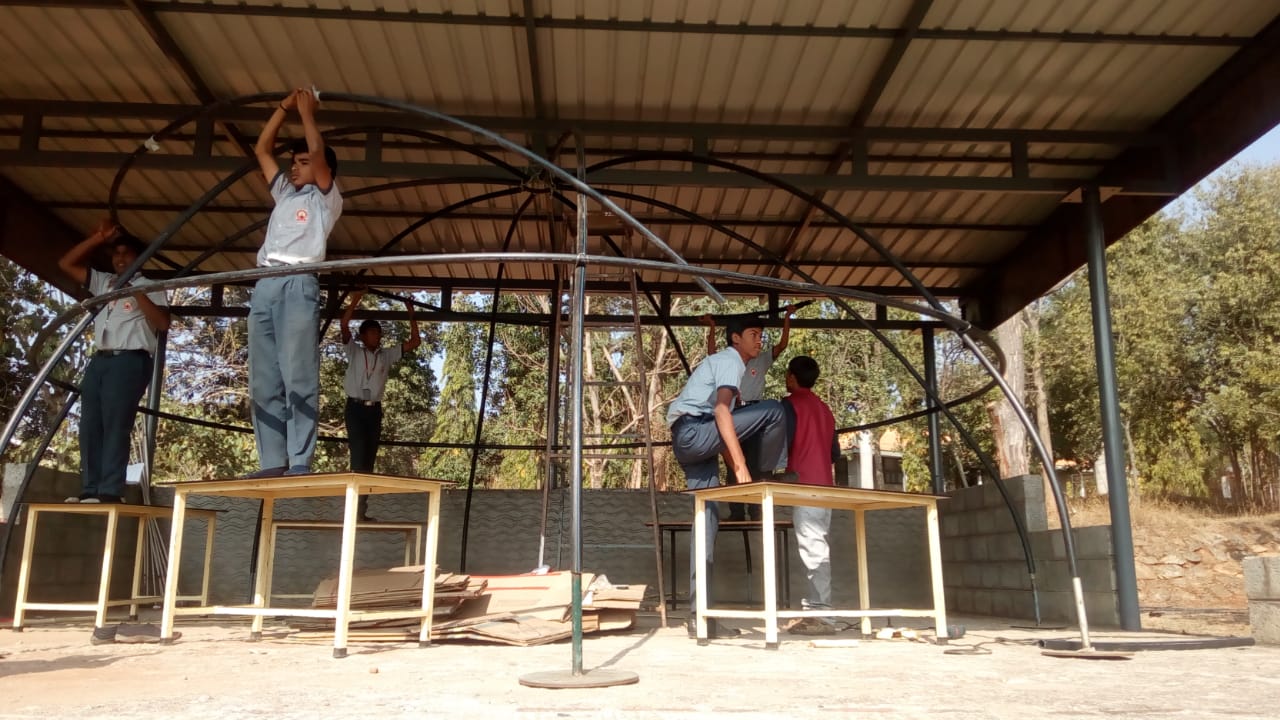
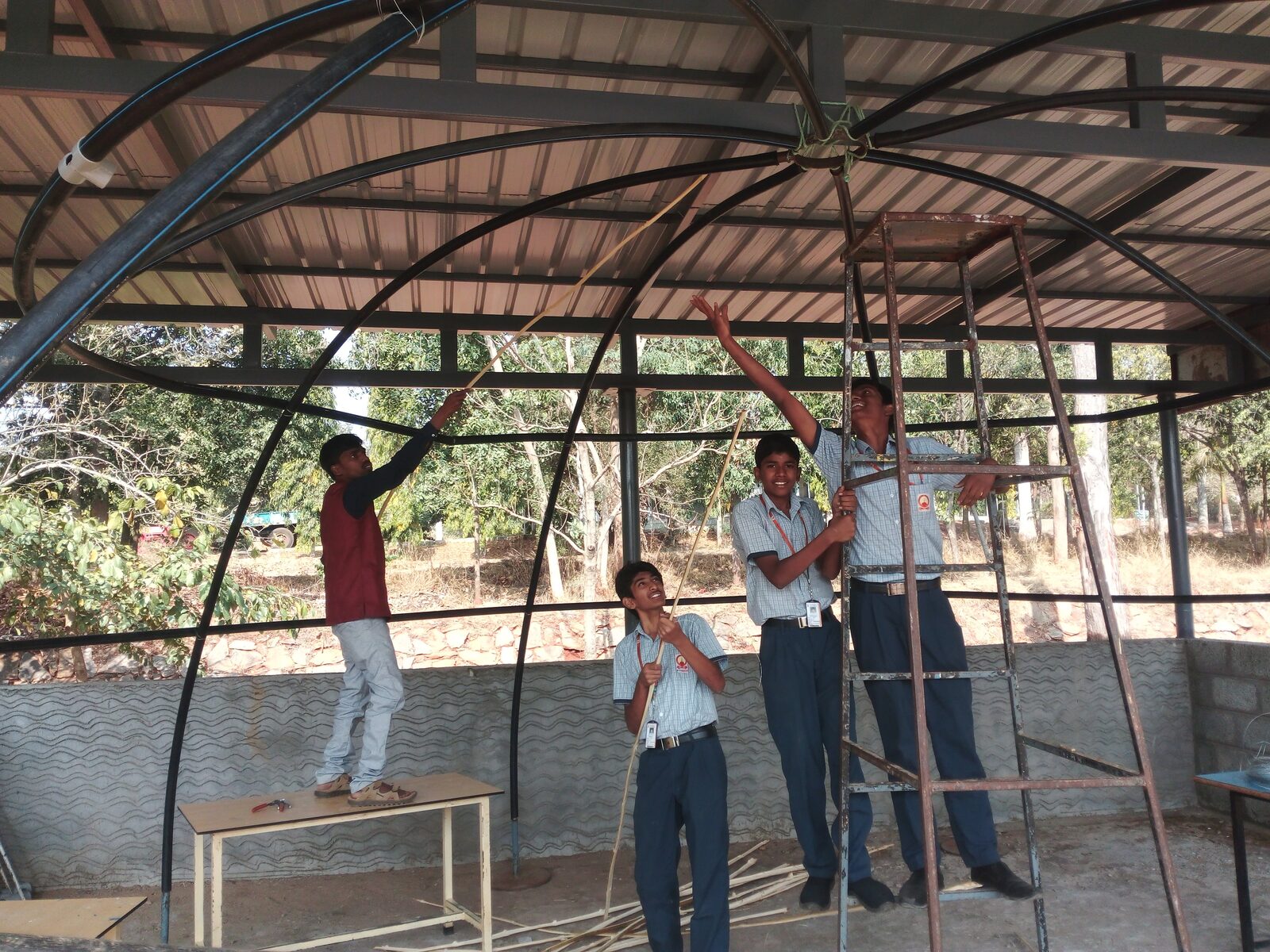
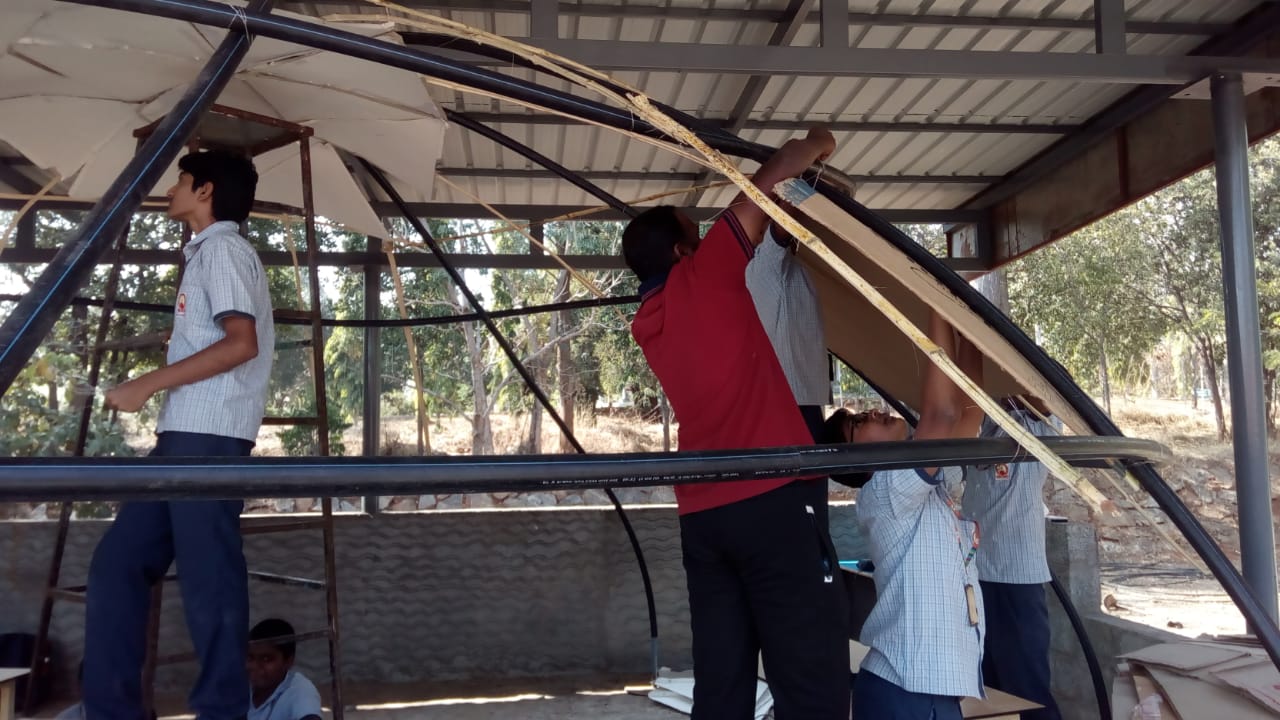
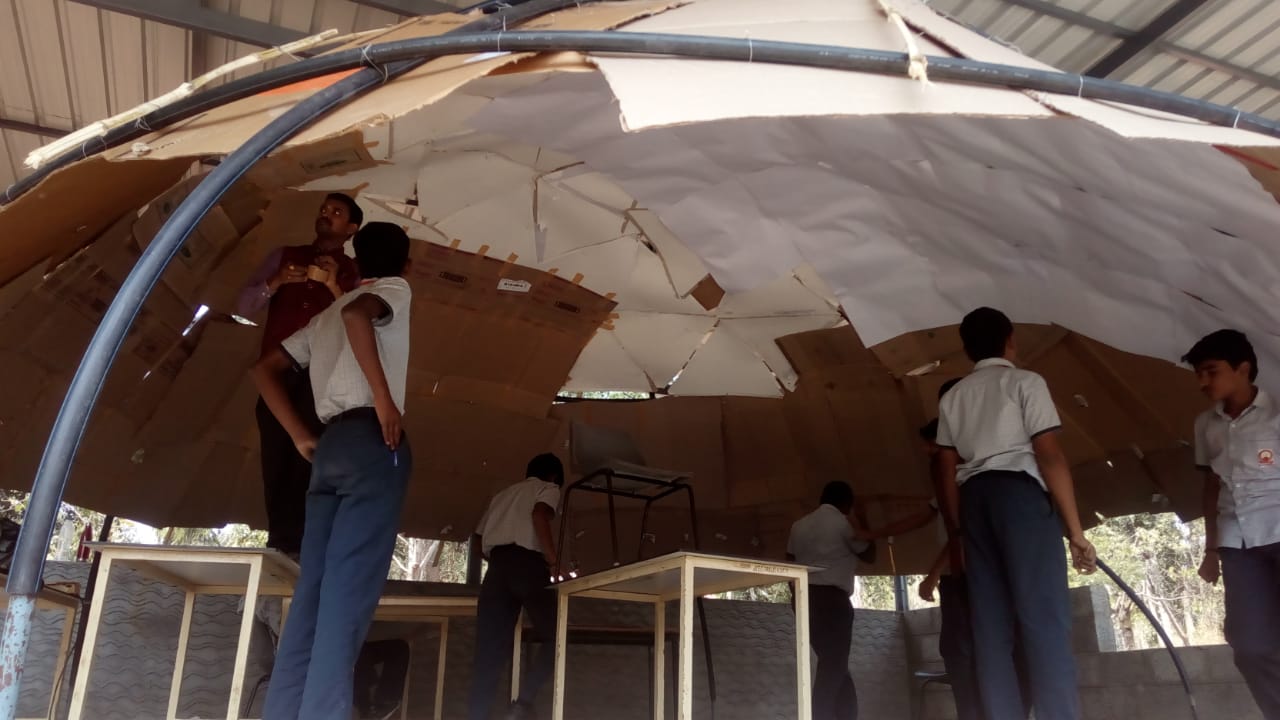
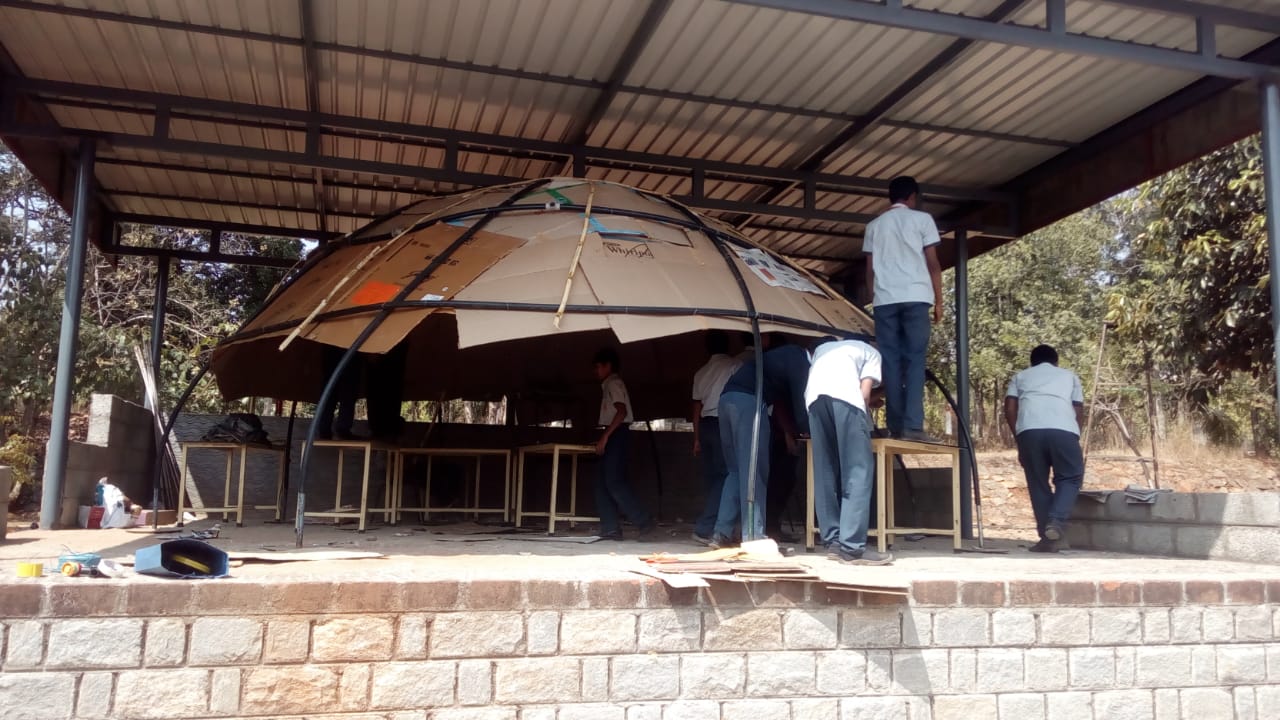
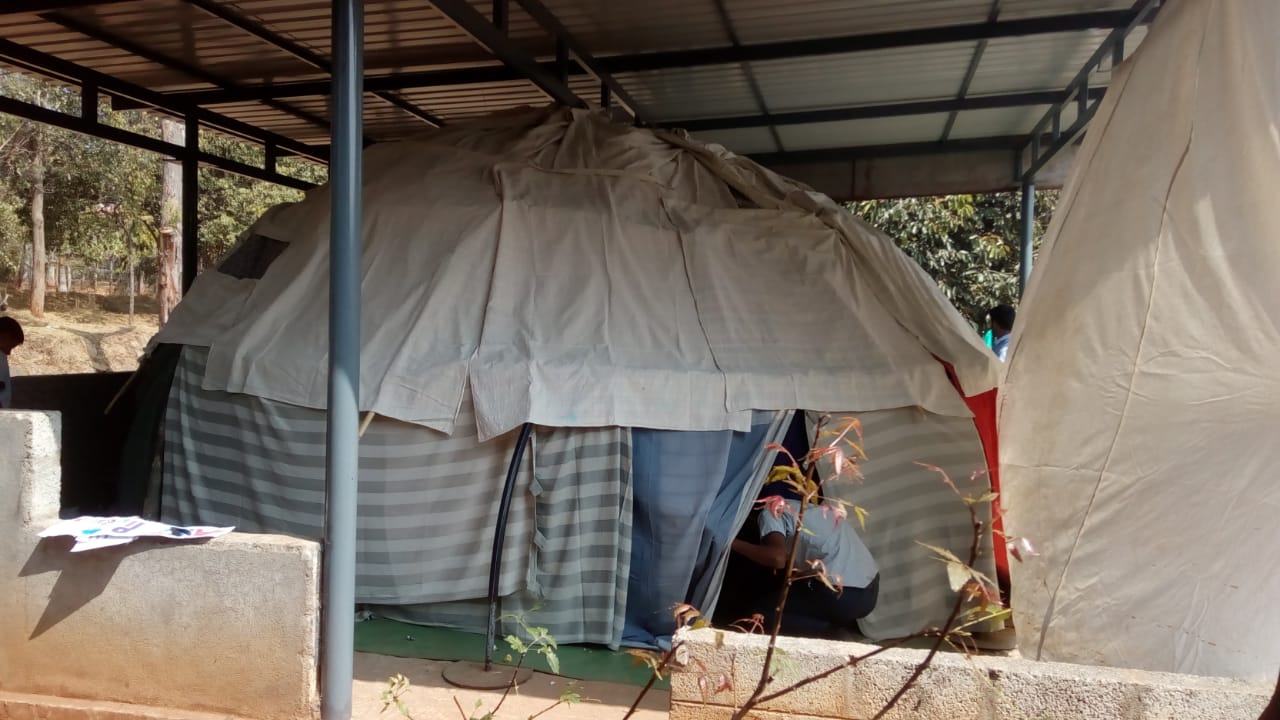
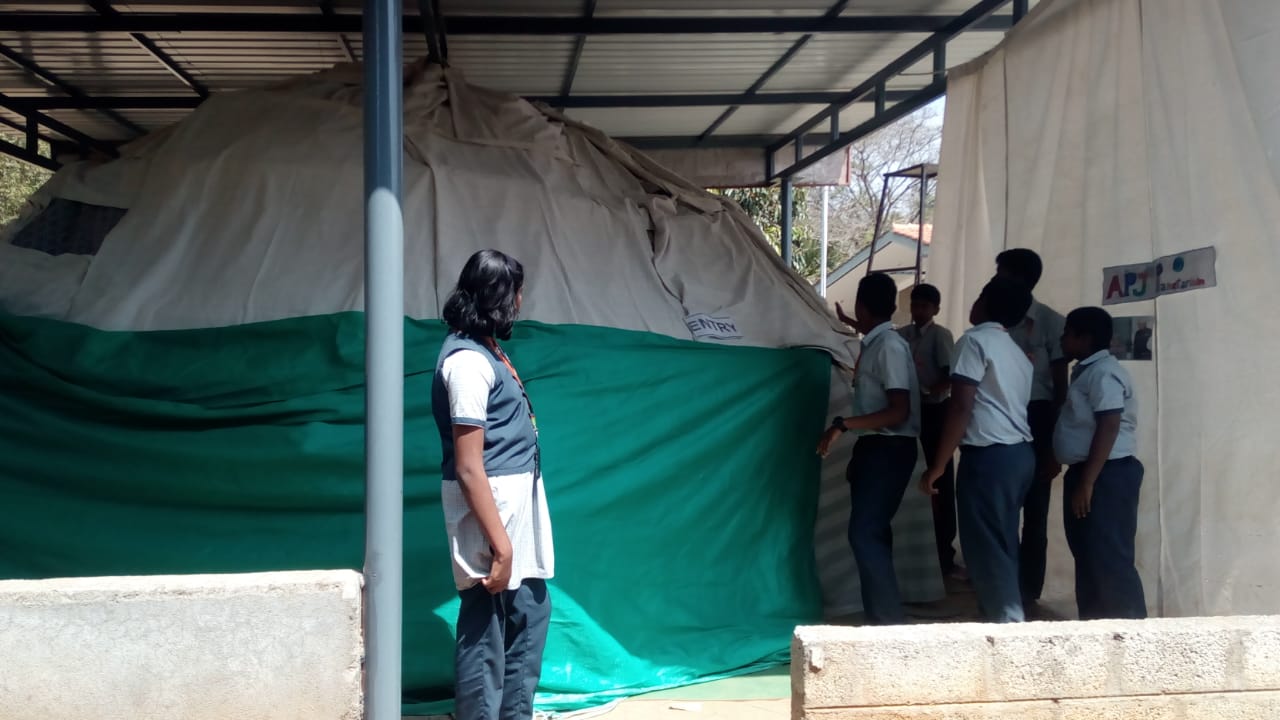
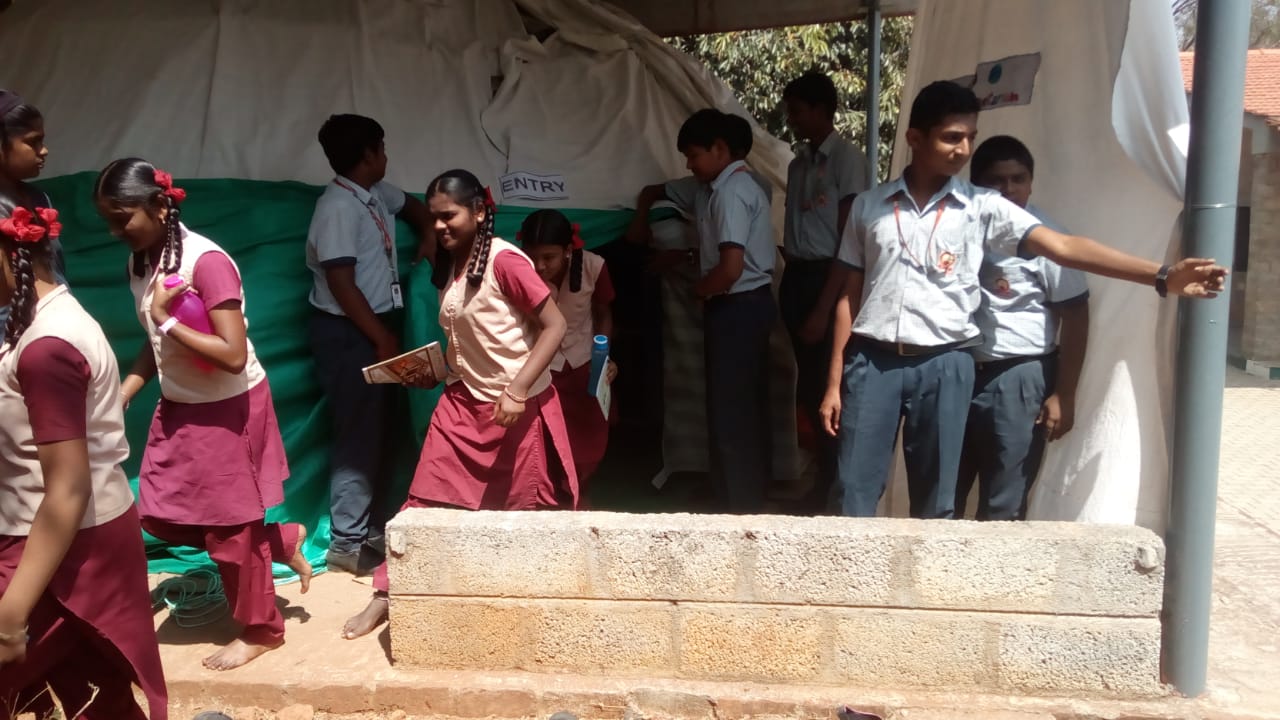
The first working planetarium dome built on campus by MMS students and teachers, a compact geodesic dome with a 10-seat capacity, fitted with its own star-projection rig for sky shows. Version 1 proved the concept on campus and paved the way for the larger Version 2 dome that followed.


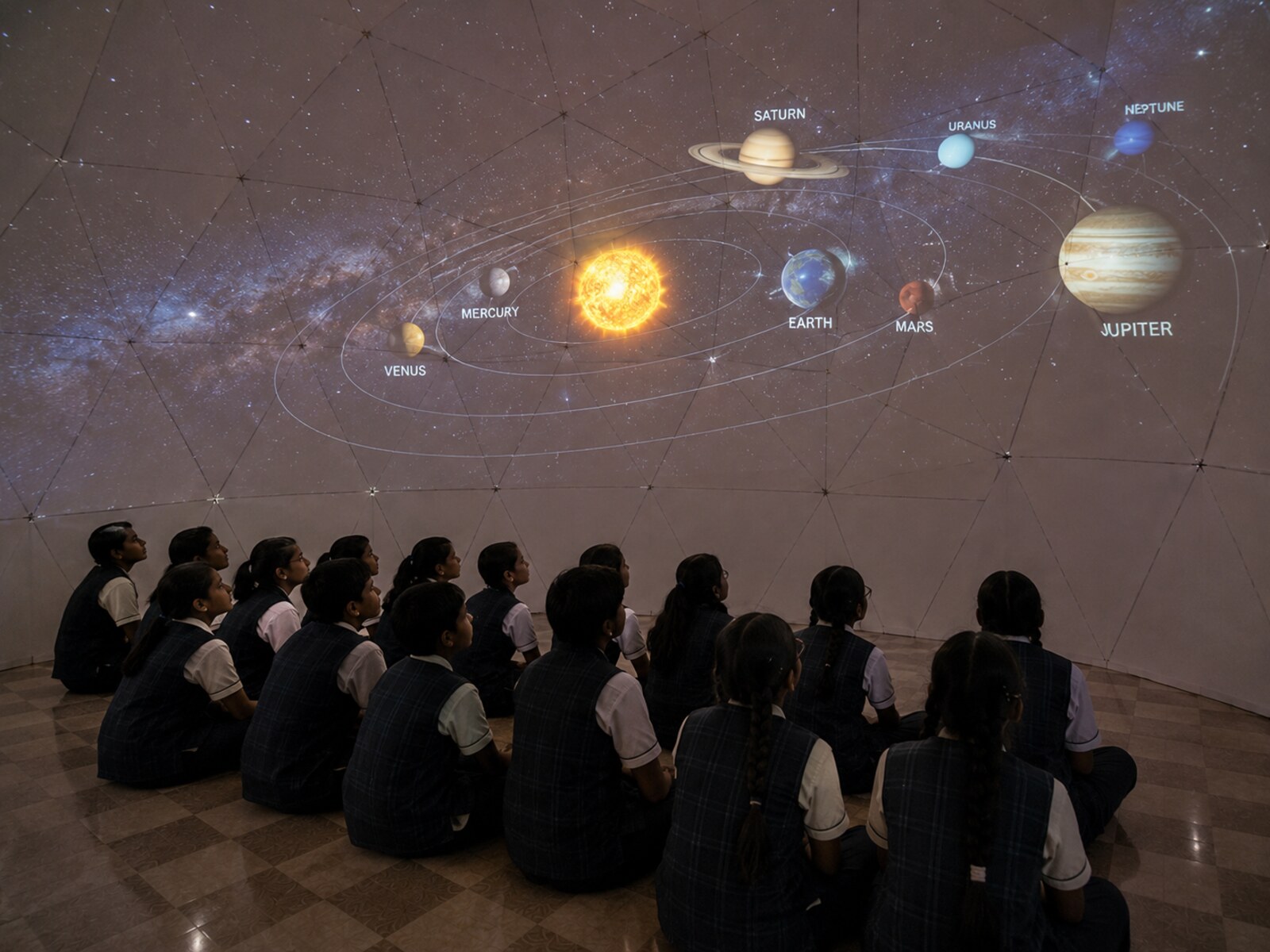
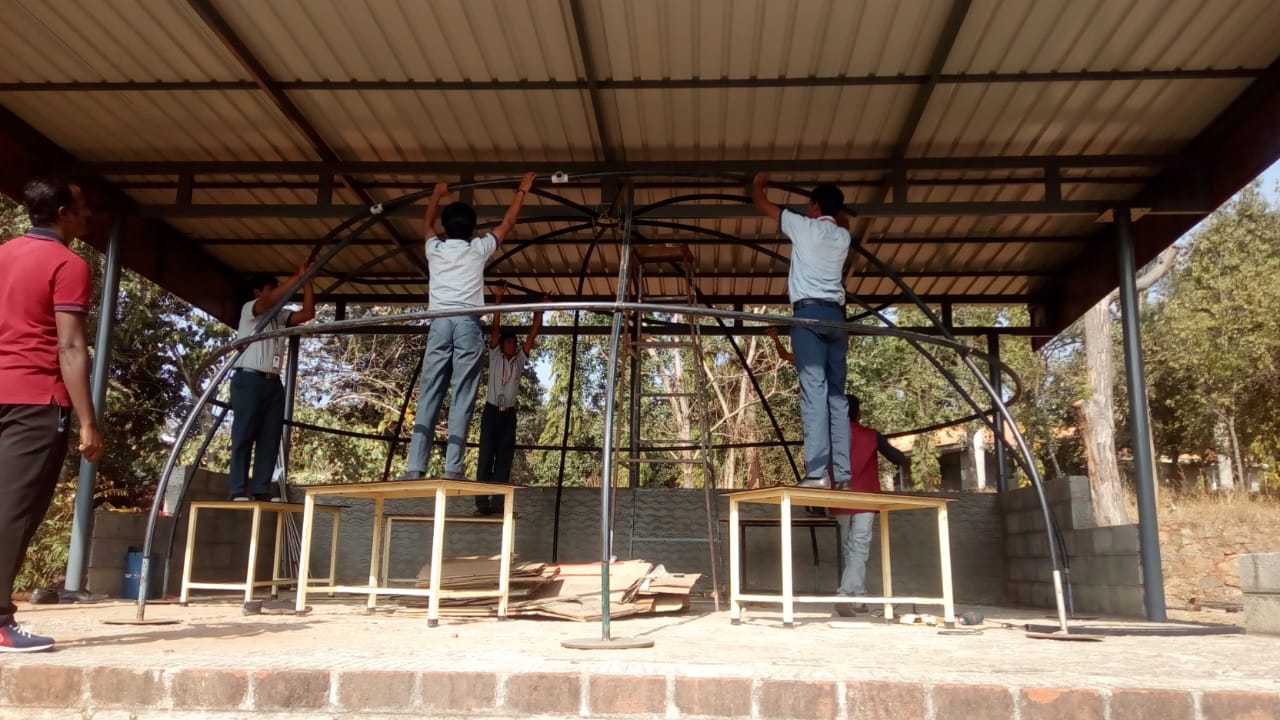
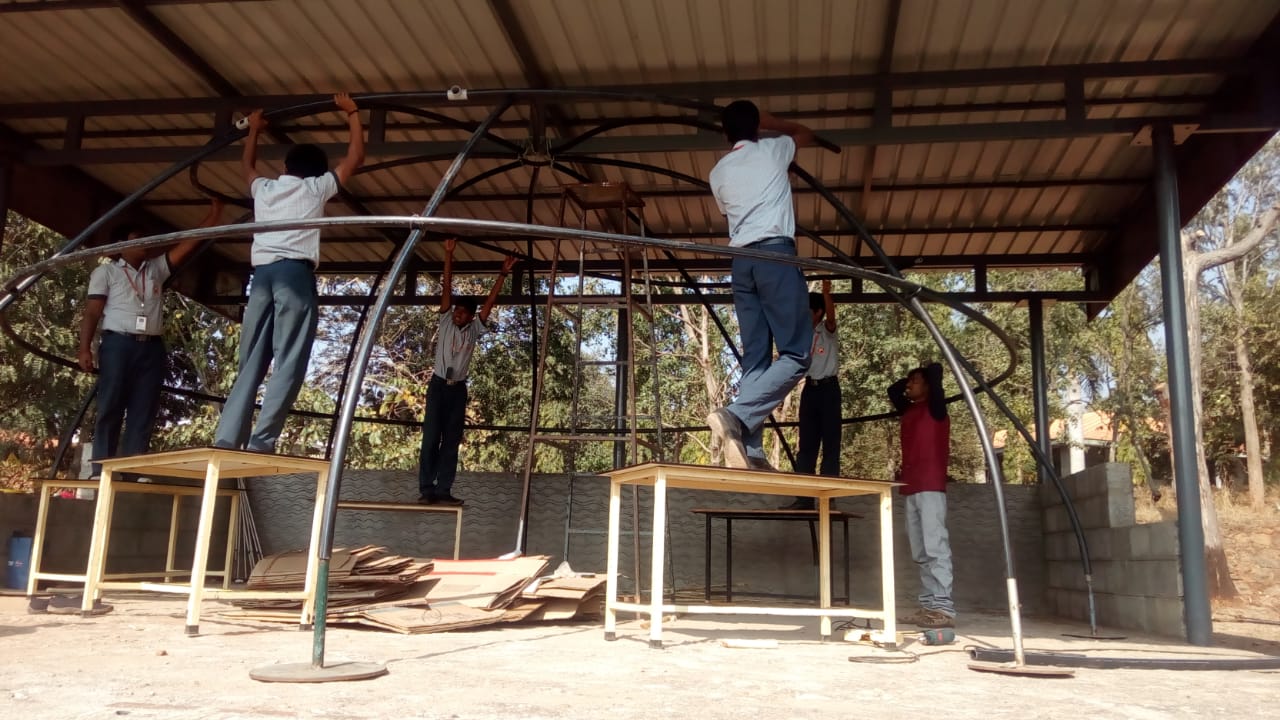
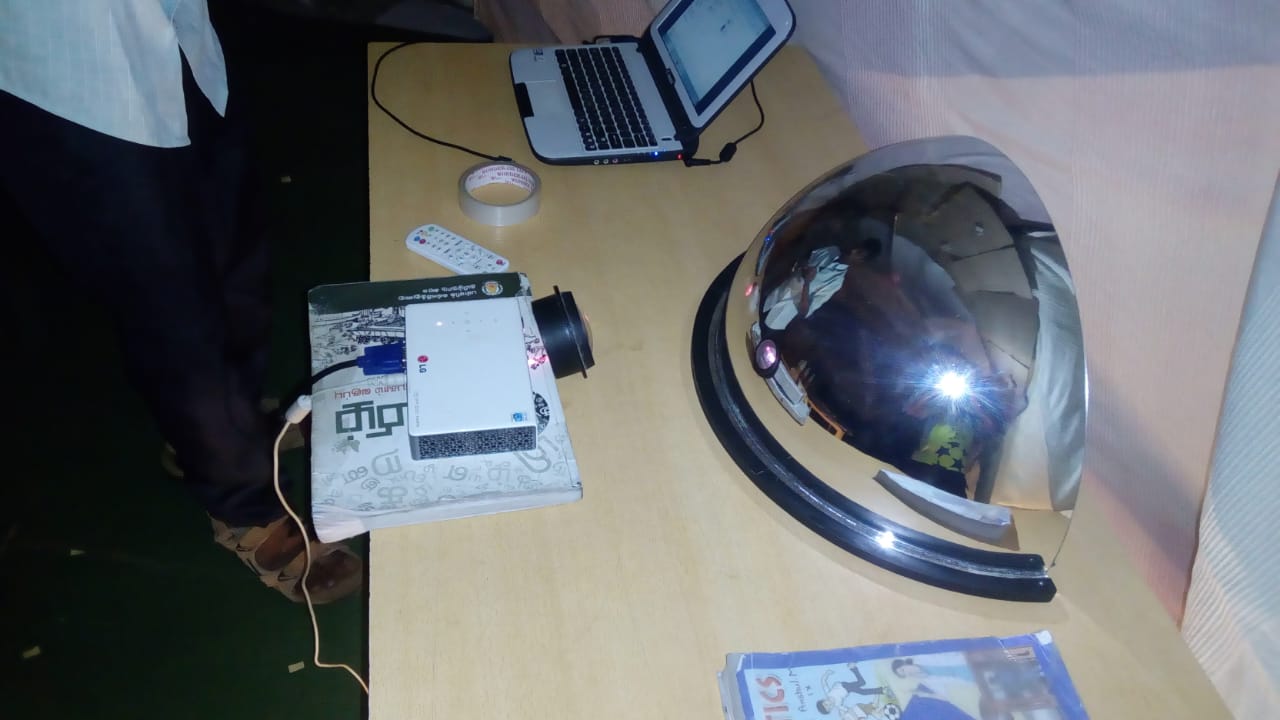
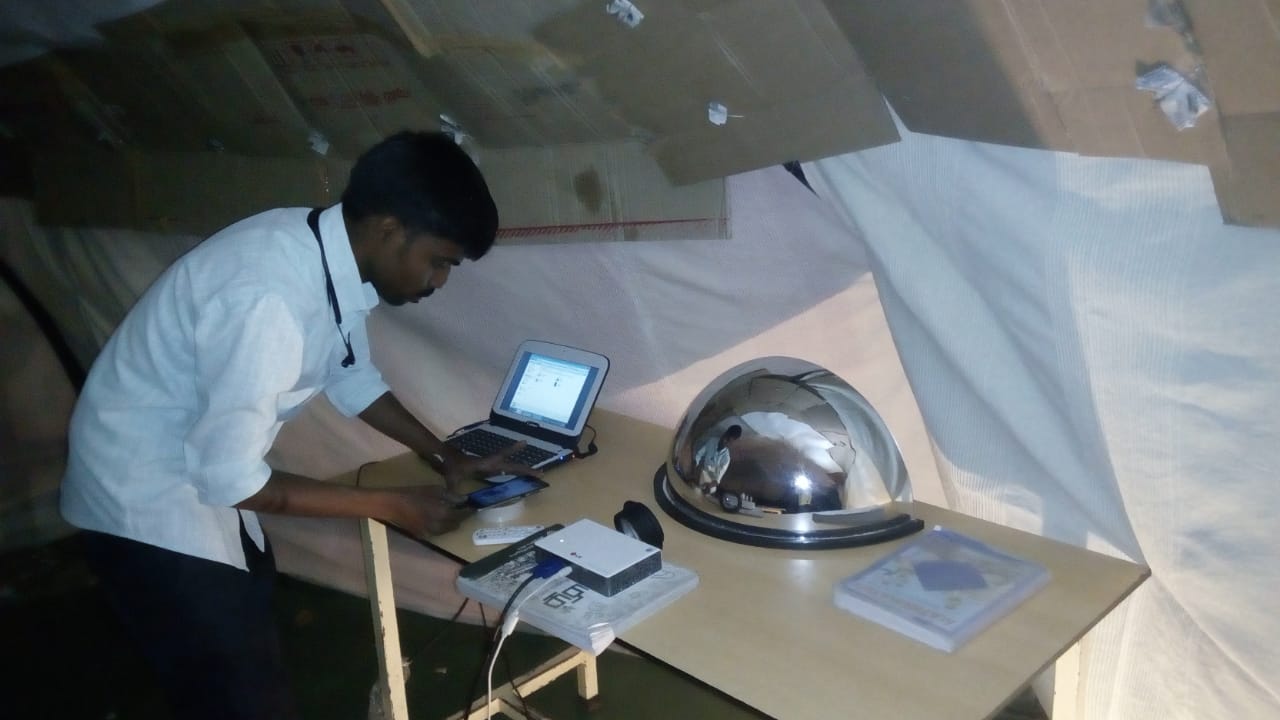
A working, walk-in planetarium dome, engineered and built on campus by MMS students and teachers. The geodesic frame was raised by hand, panelled in cardboard and cloth, and fitted with a projector-and-mirror rig that spreads a flat image across the whole ceiling, turning it into a dome full of stars.
The dome's geometry comes from mathematics, the star-projection system from physics (a convex spherical mirror spreading a projector's image across the entire ceiling), and the show itself runs on ICT, a laptop and projector driving a display students designed and built themselves.


The Space Lab is built on the belief that space should be within reach of every child, and ISRO recognises that commitment too. Mathakondapalli Model School is an officially Registered Space Tutor of ISRO, listed as entry 249 on ISRO's own Space Tutor programme page.
View MMS on the ISRO Space Tutor List → Read the full ISRO Registered Space Tutor story →Follow the latest missions, announcements and outreach programs directly from ISRO and NASA's official websites.
India's national space agency.
The United States' space agency.
Loading curriculum…
This section is reserved for the Space Lab in-charge's name, photograph, and note, to be added through the site's content editor at any time.
Eleven labs, one integrated ecosystem.