LAB / 01

VR Lab

Inaugurated 24 January 2024. NCERT curriculum based simulations for Class KG to 12, including a full International Space Station experience. From walking through the International Space Station to visualizing concepts no textbook diagram can capture, the VR Lab makes abstract ideas tangible for every grade, KG through 12.

Our Journey

From cardboard to Meta Quest: the VR Lab through the years

How virtual reality at MMS grew from a homemade classroom experiment into a full VR Lab used by every grade, KG through 12.

2014Onwards

Homemade VR viewers

In 2014, long before a dedicated VR Lab existed, MMS developed its own VR viewing device and held classes using it, an integrated approach that applied the converging and diverging properties of lenses on light to build a working virtual reality viewer by hand, complete with lenses and a strap, using ordinary smartphones as the screen.

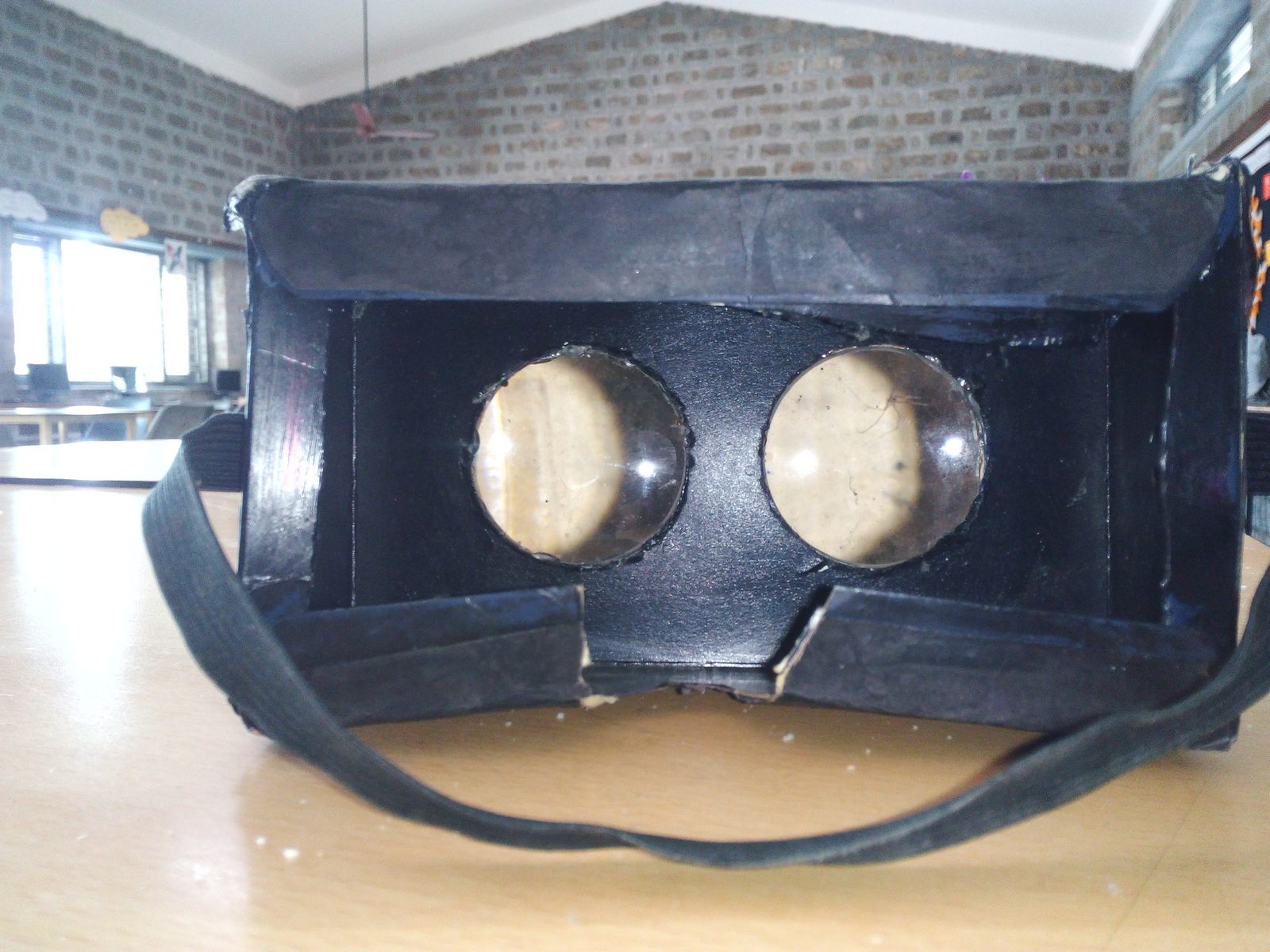
Homemade cardboard VR viewer built by MMS students, labelled GEAR VR Close up of the lenses inside the homemade cardboard VR viewer
202424 January

VR Class Voyage: the Virtual Reality Classroom is inaugurated

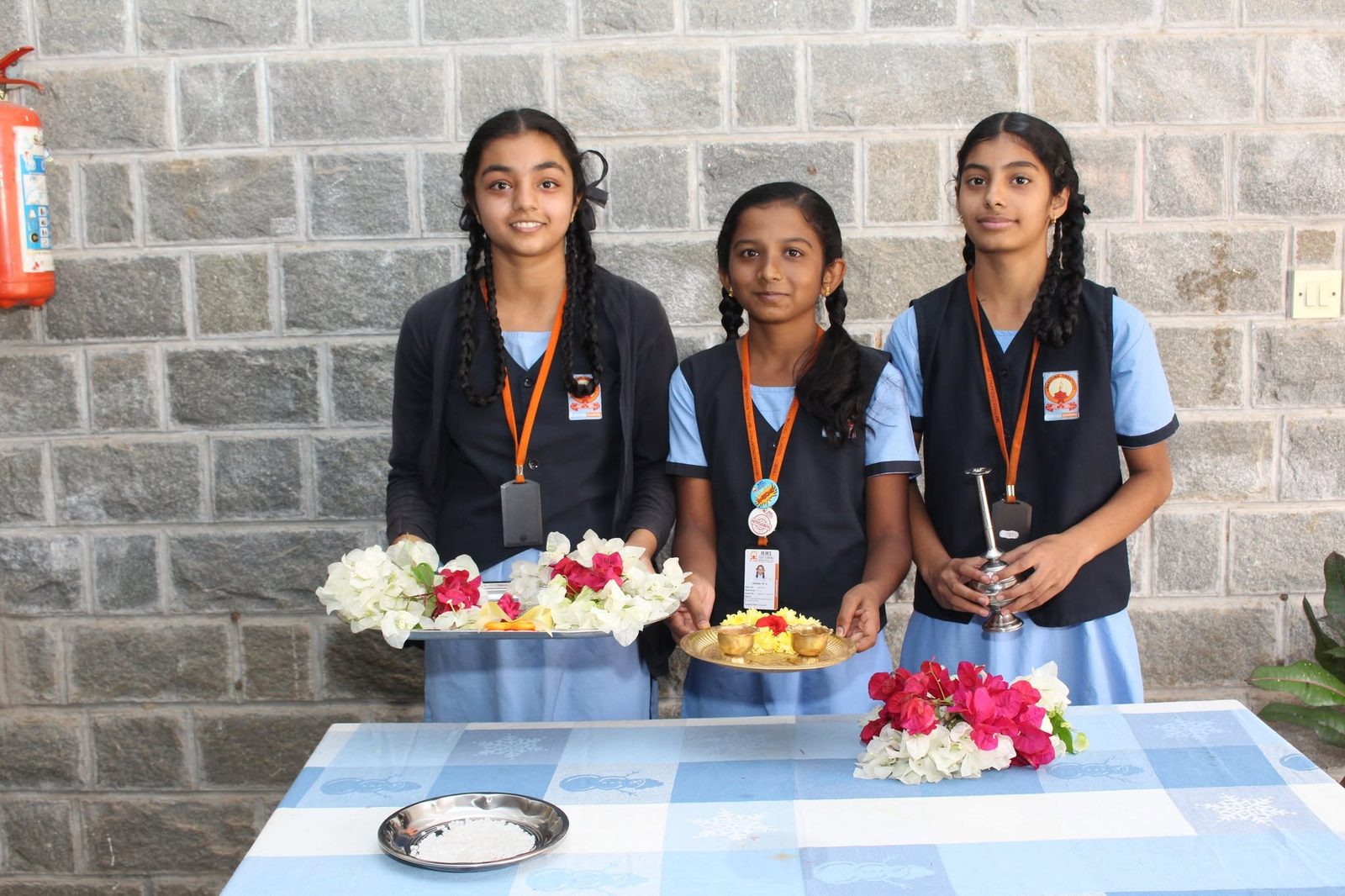
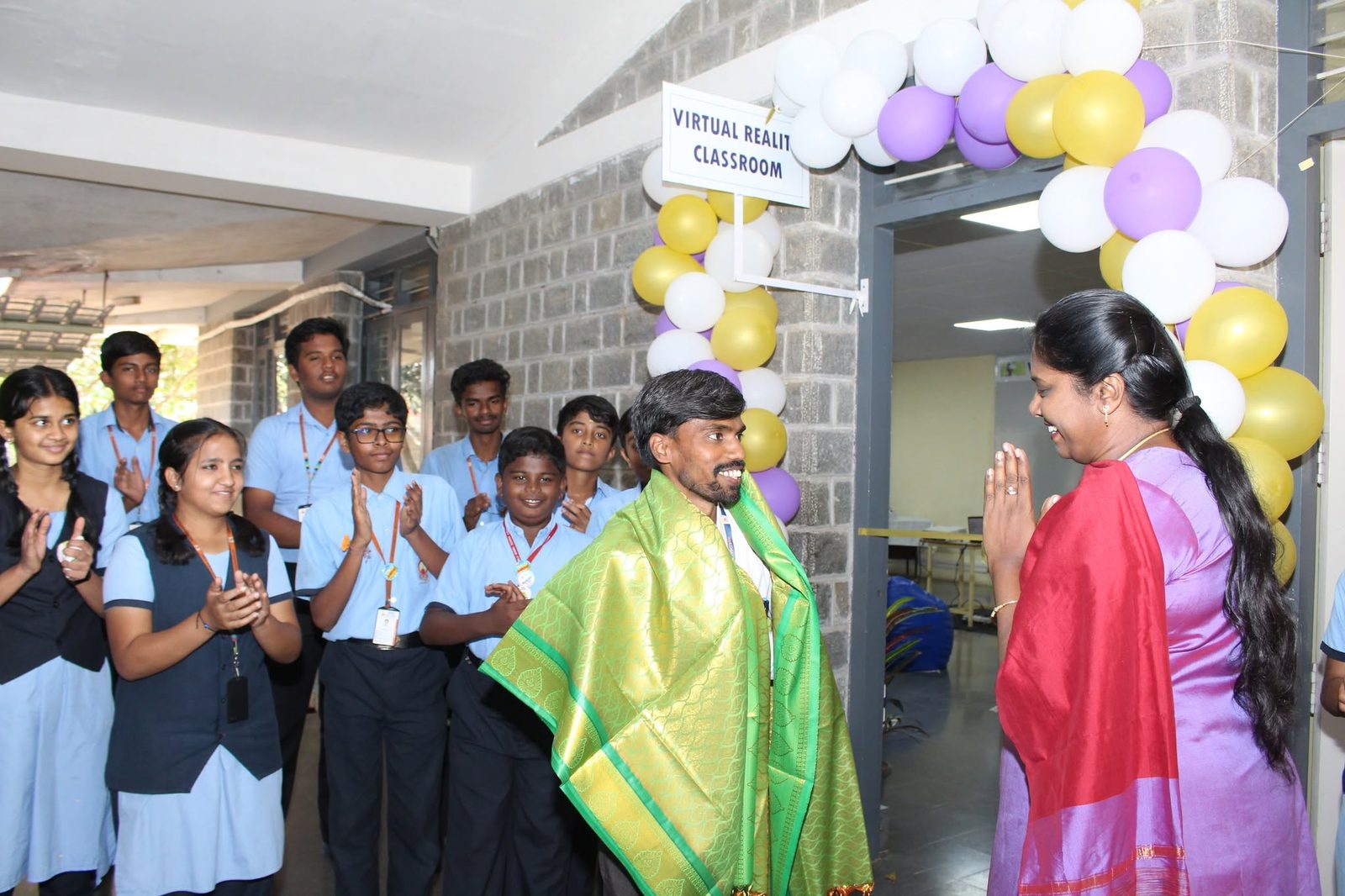
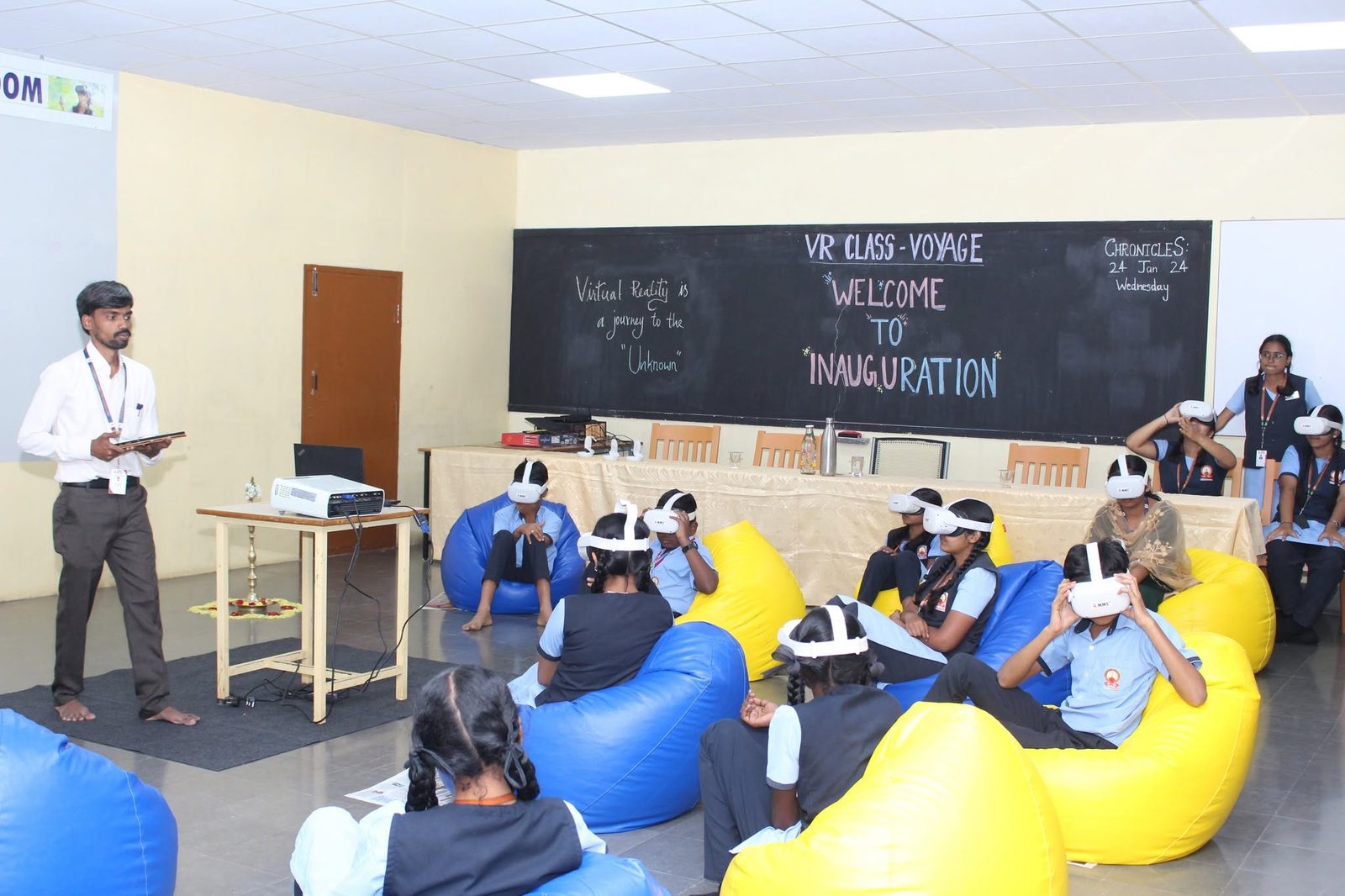
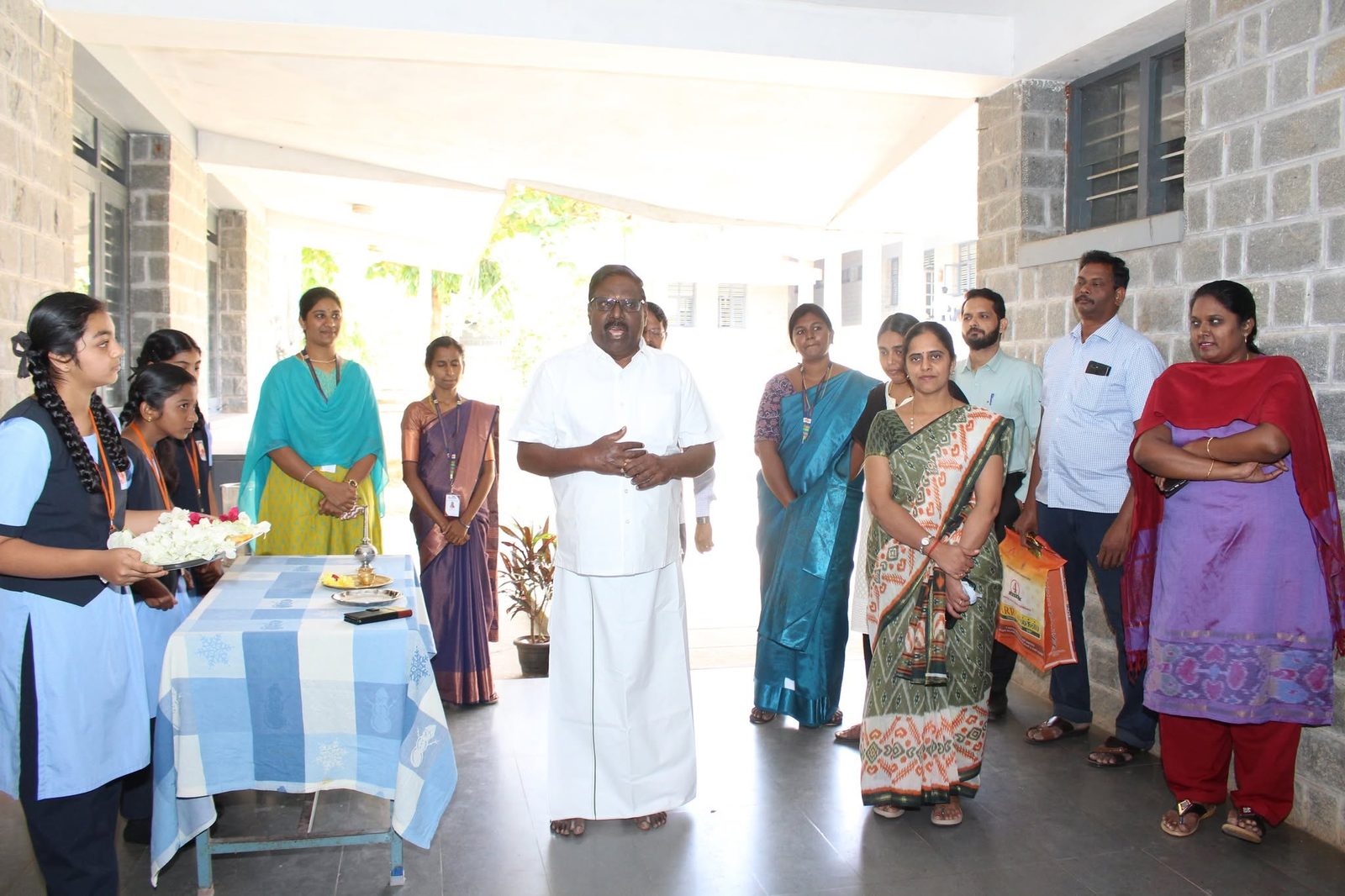
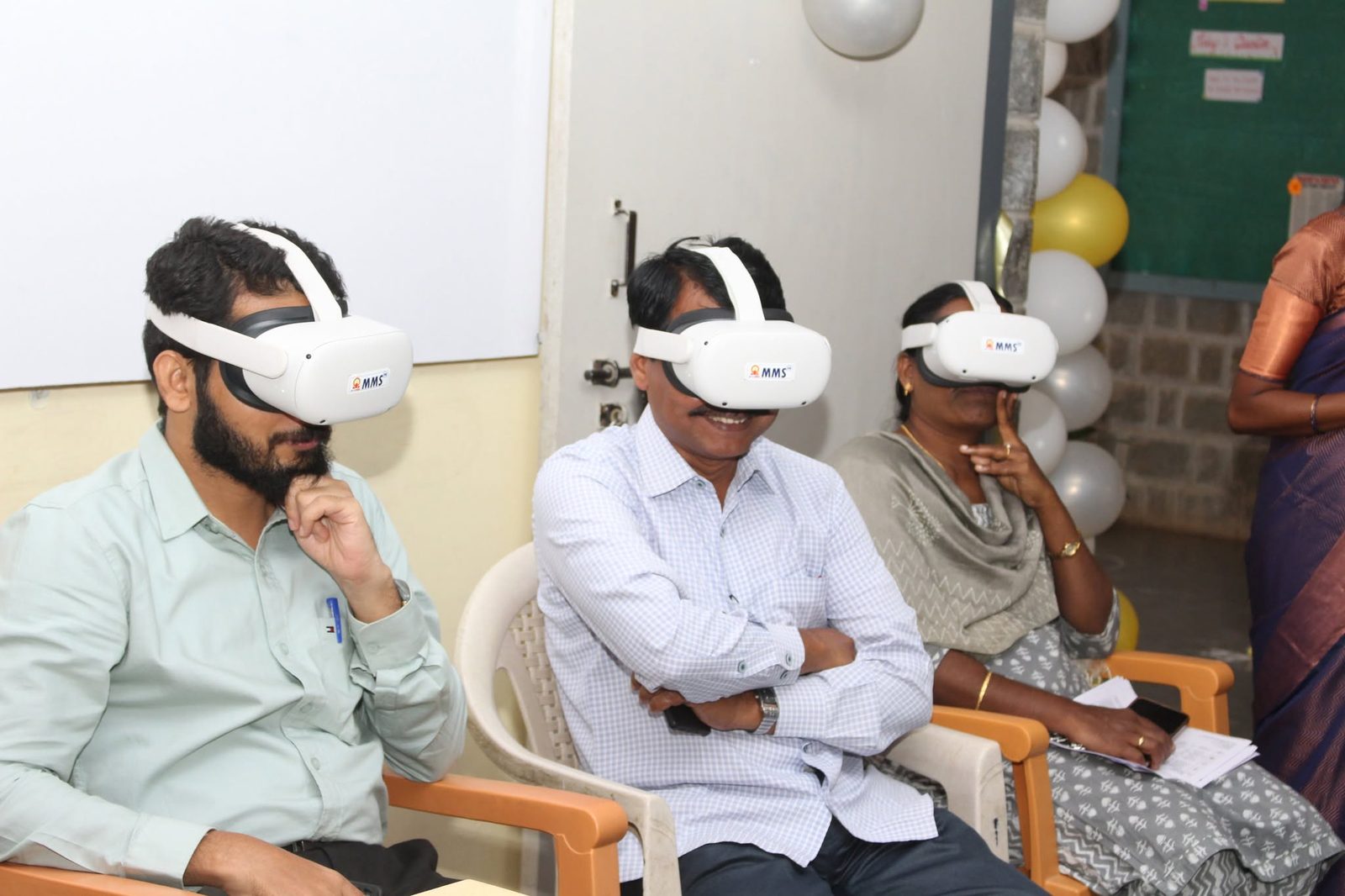
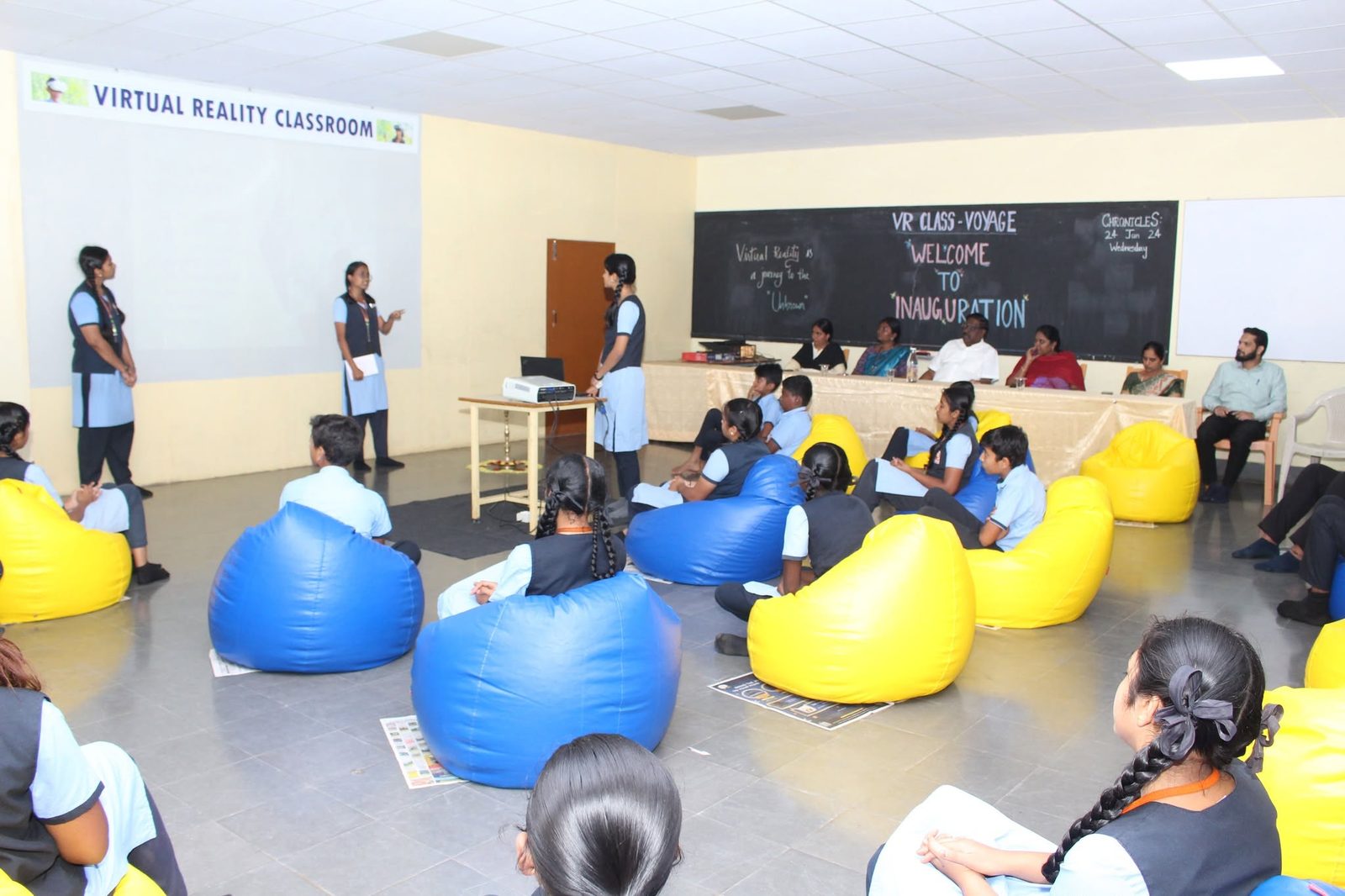
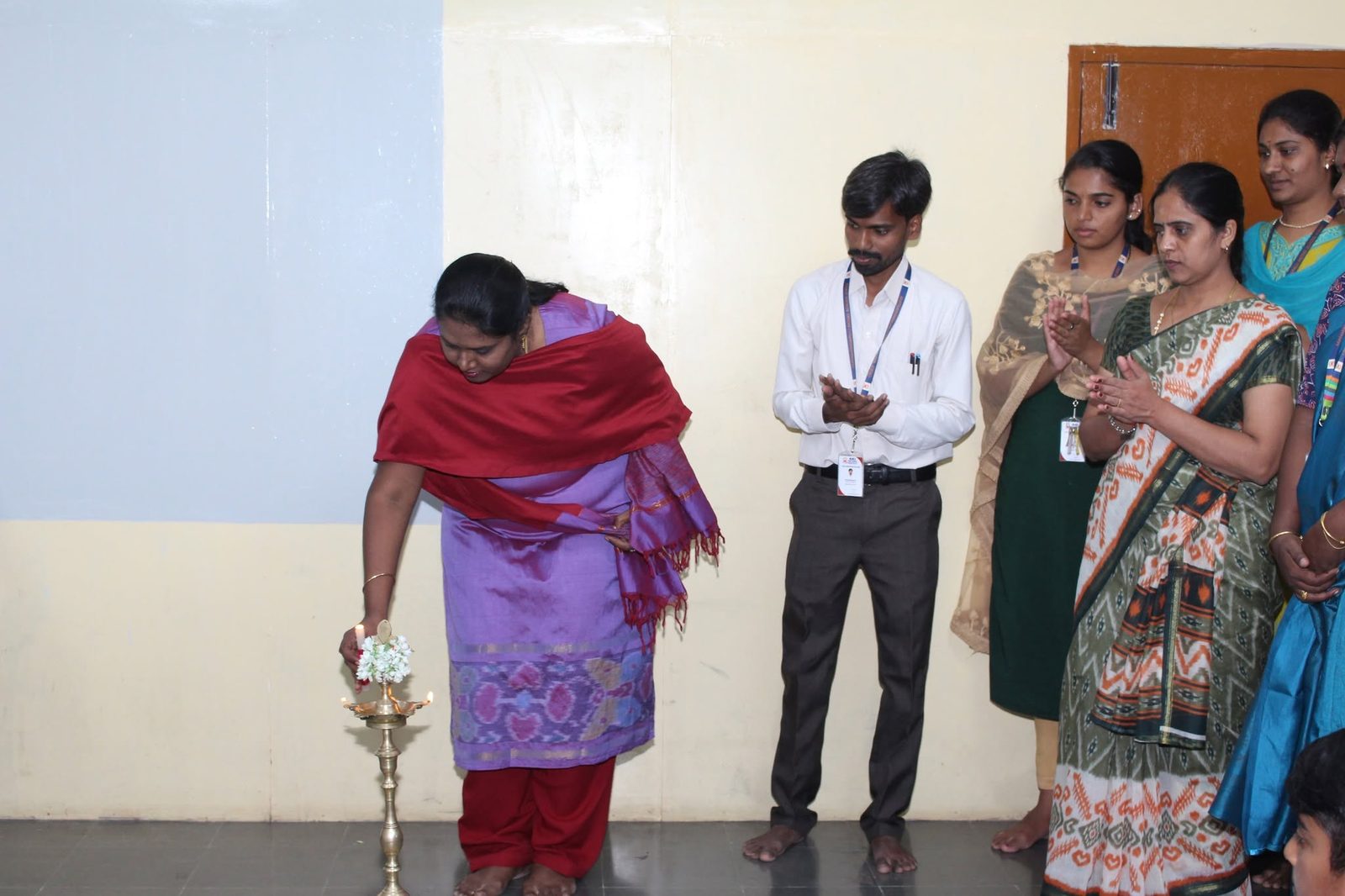
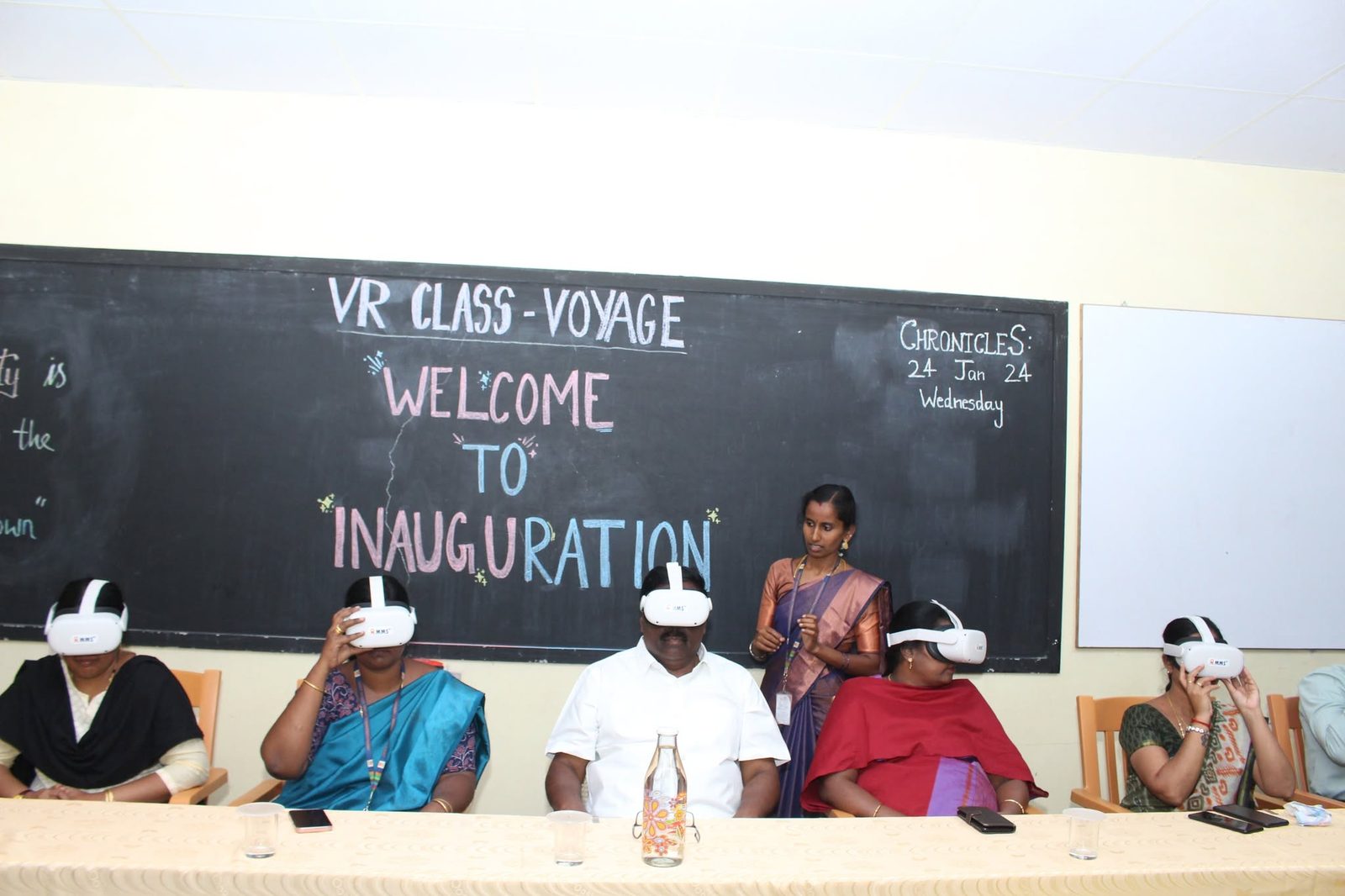
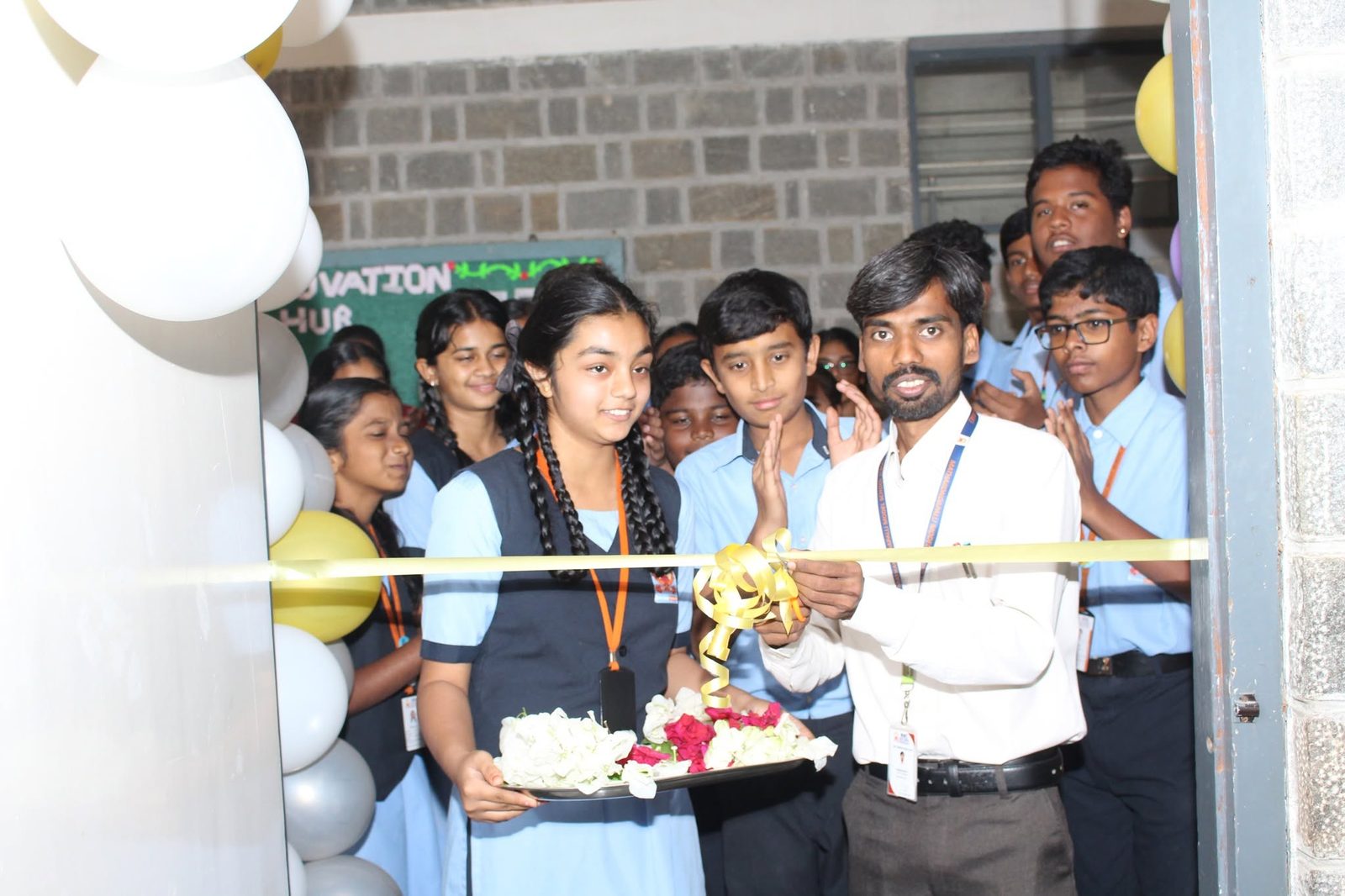
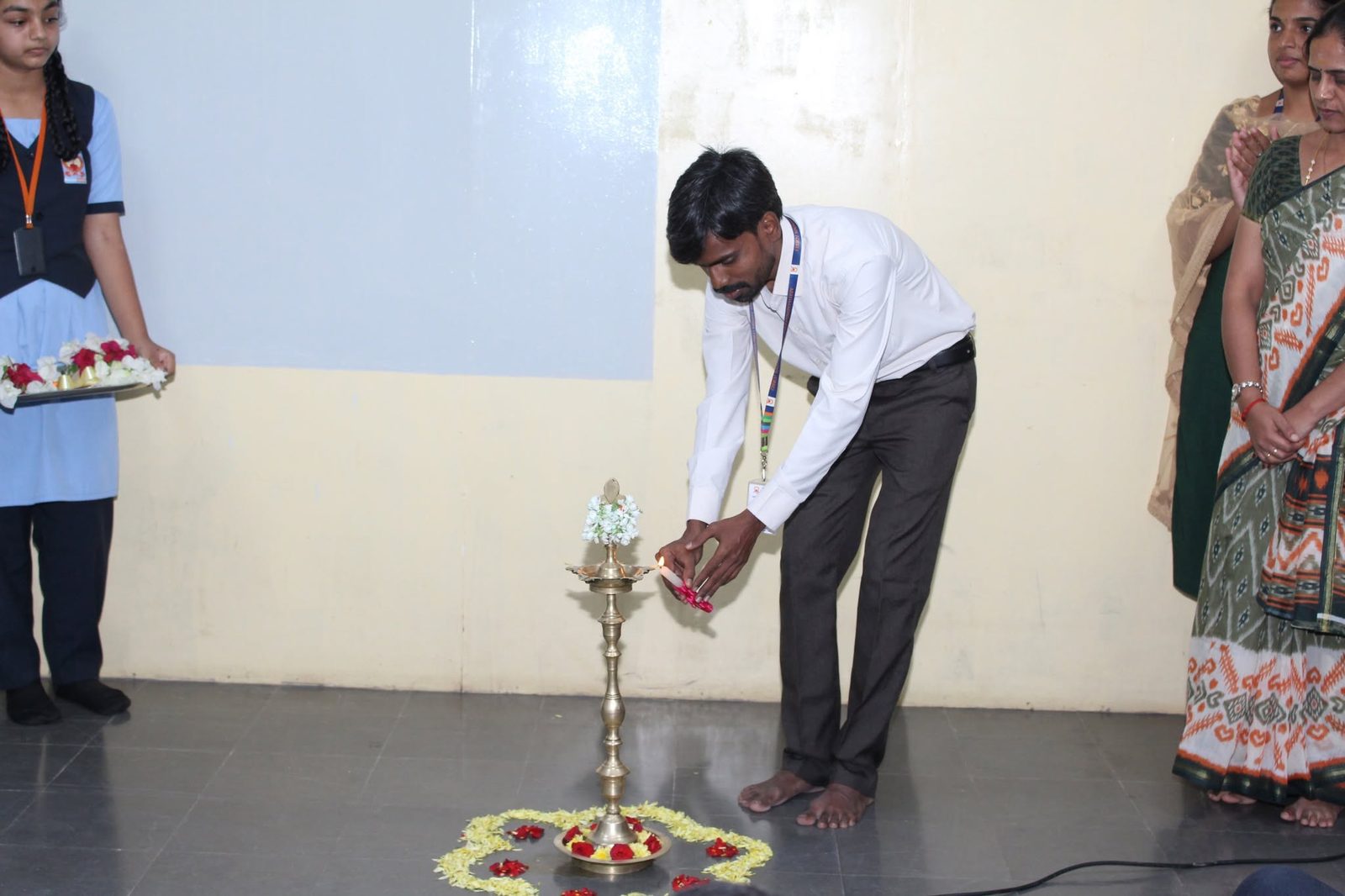
On 24 January 2024, MMS inaugurated its dedicated Virtual Reality Classroom under the theme “Virtual Reality is a journey to the Unknown.” School leadership, staff and students marked the occasion with a traditional lamp lighting ceremony and ribbon cutting, before the first VR Class Voyage session, where guests, teachers and students alike put on the headsets together.
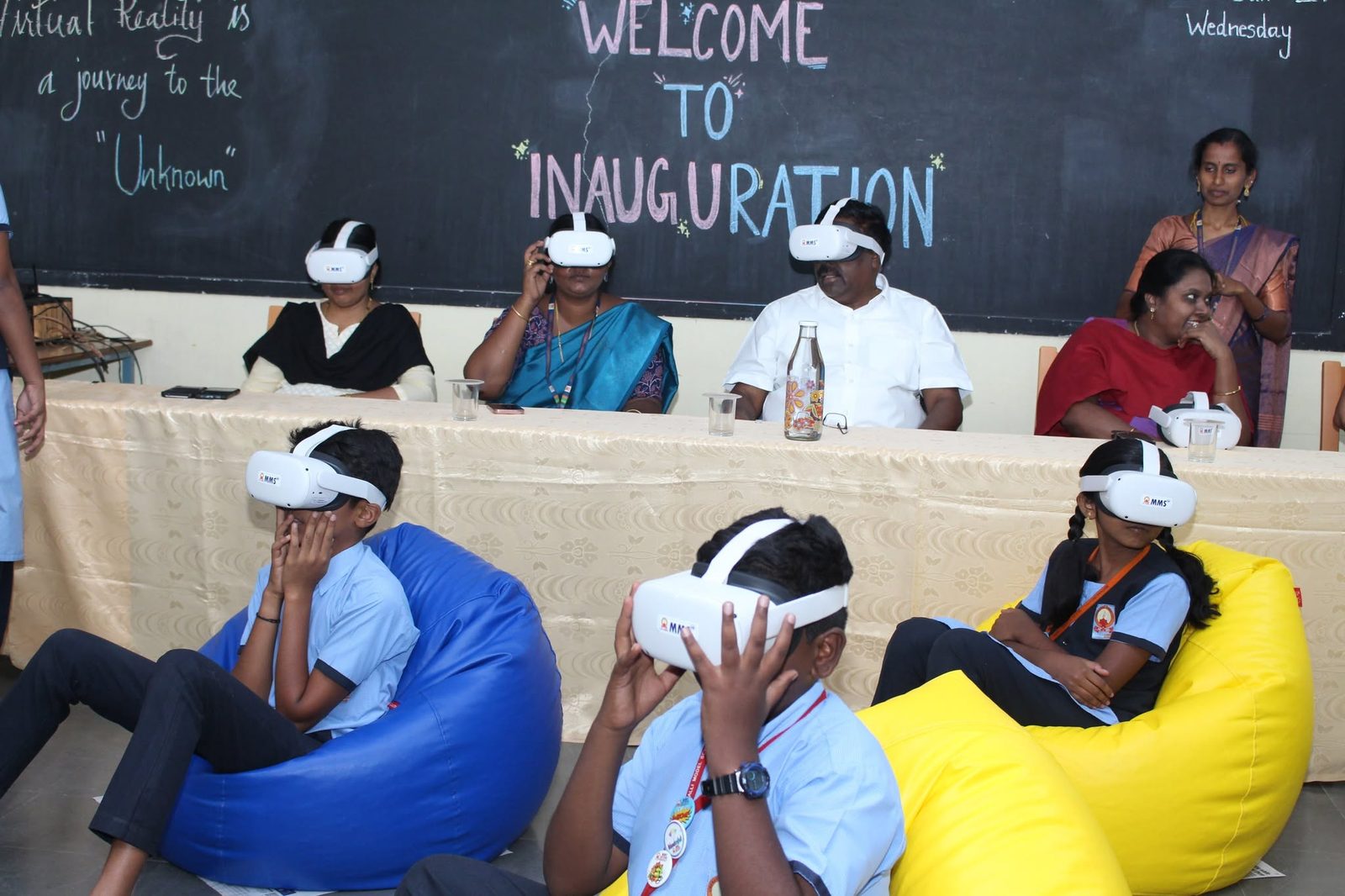
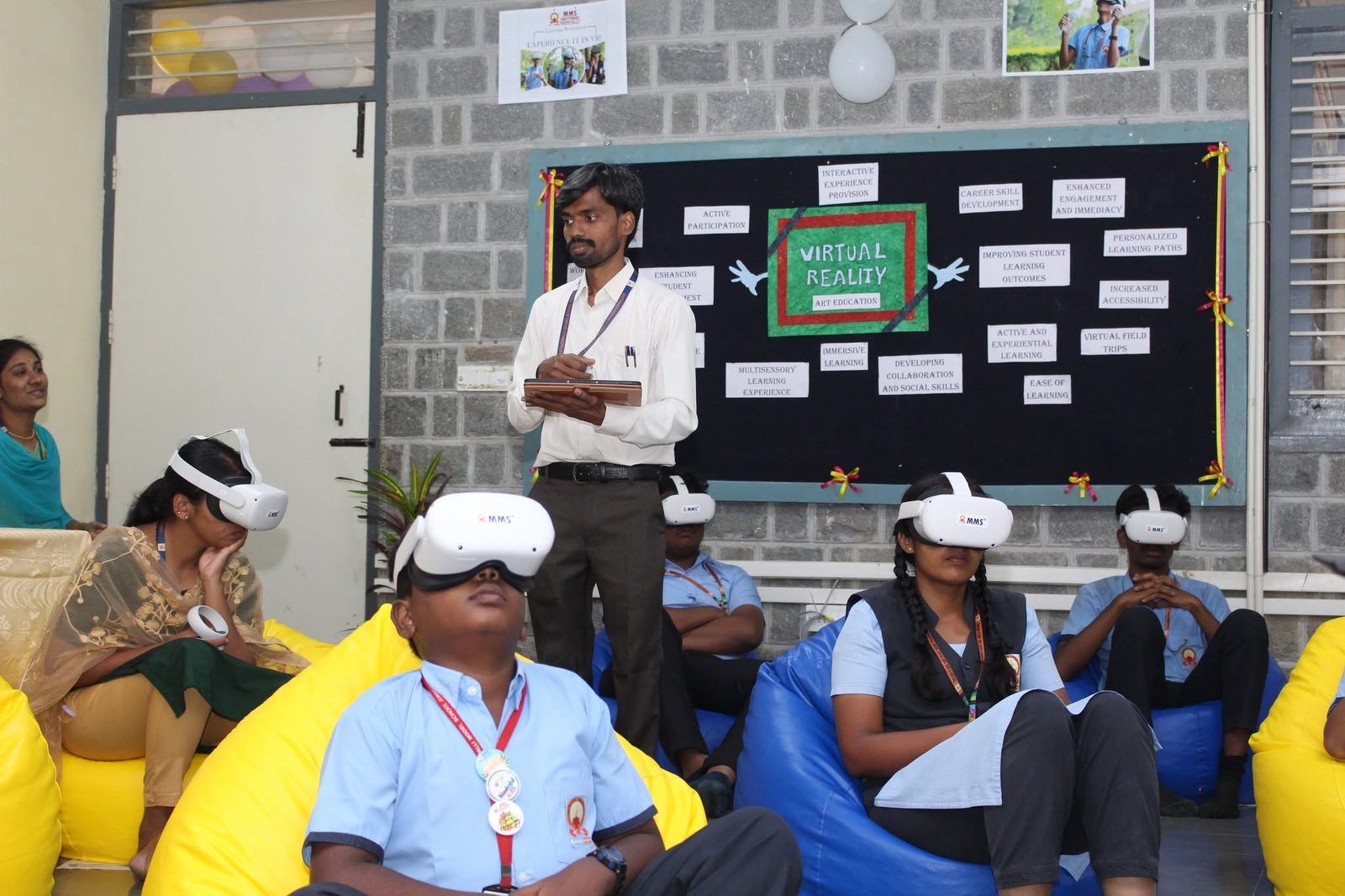
Guests and students wearing VR headsets at the VR Class Voyage inauguration, 24 January 2024
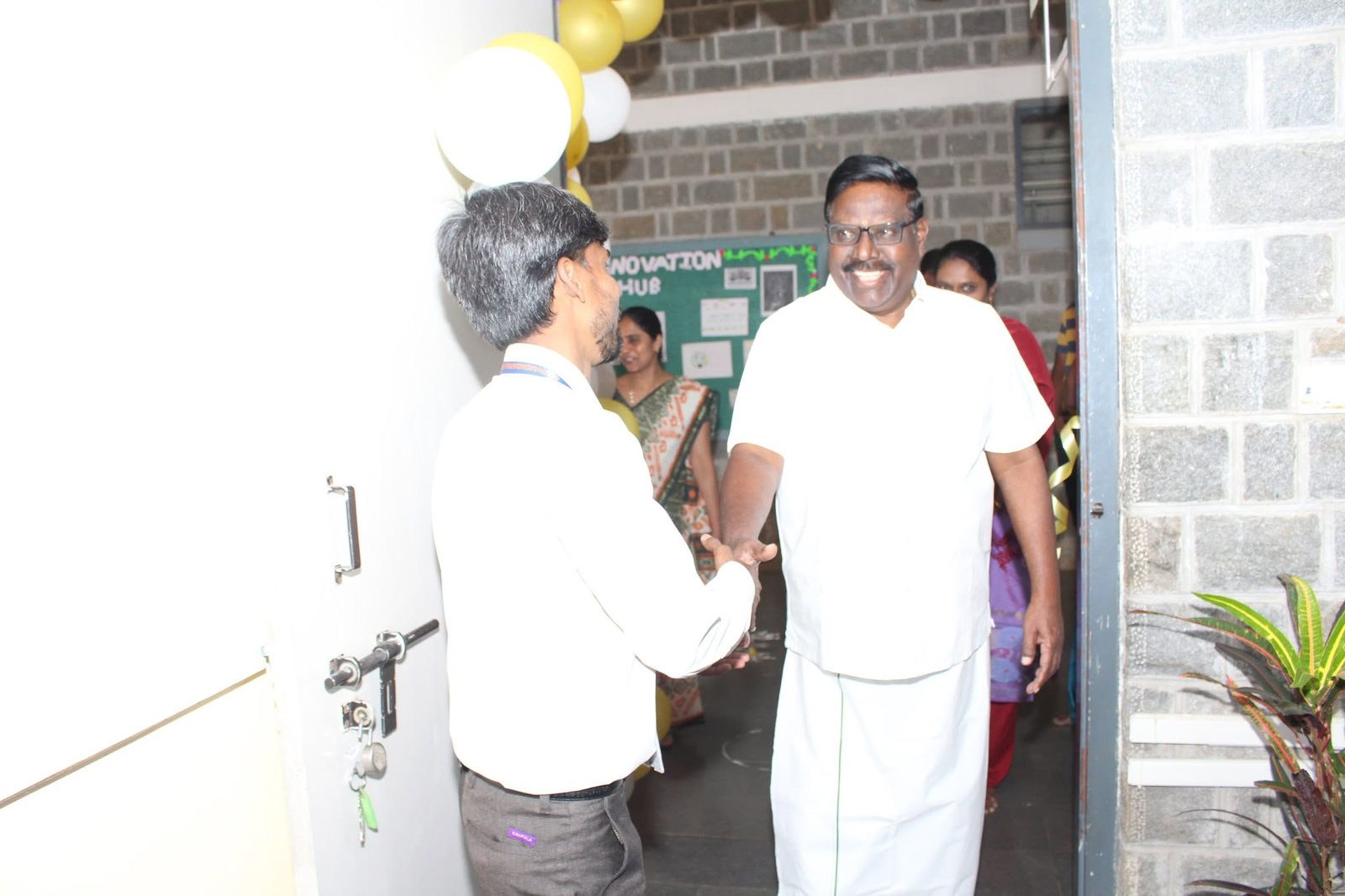
Traditional lamp lighting ceremony at the VR Class Voyage inauguration Students holding the ceremonial thali for the inauguration ritual Ribbon cutting at the entrance to the newly named Virtual Reality Classroom Wide view of the VR Class Voyage inauguration with guests and students in the Virtual Reality Classroom Staff and students welcoming a guest at the start of the inauguration MMS staff trying the VR headsets together
TodayIn Daily Use

Meta Quest headsets, every grade

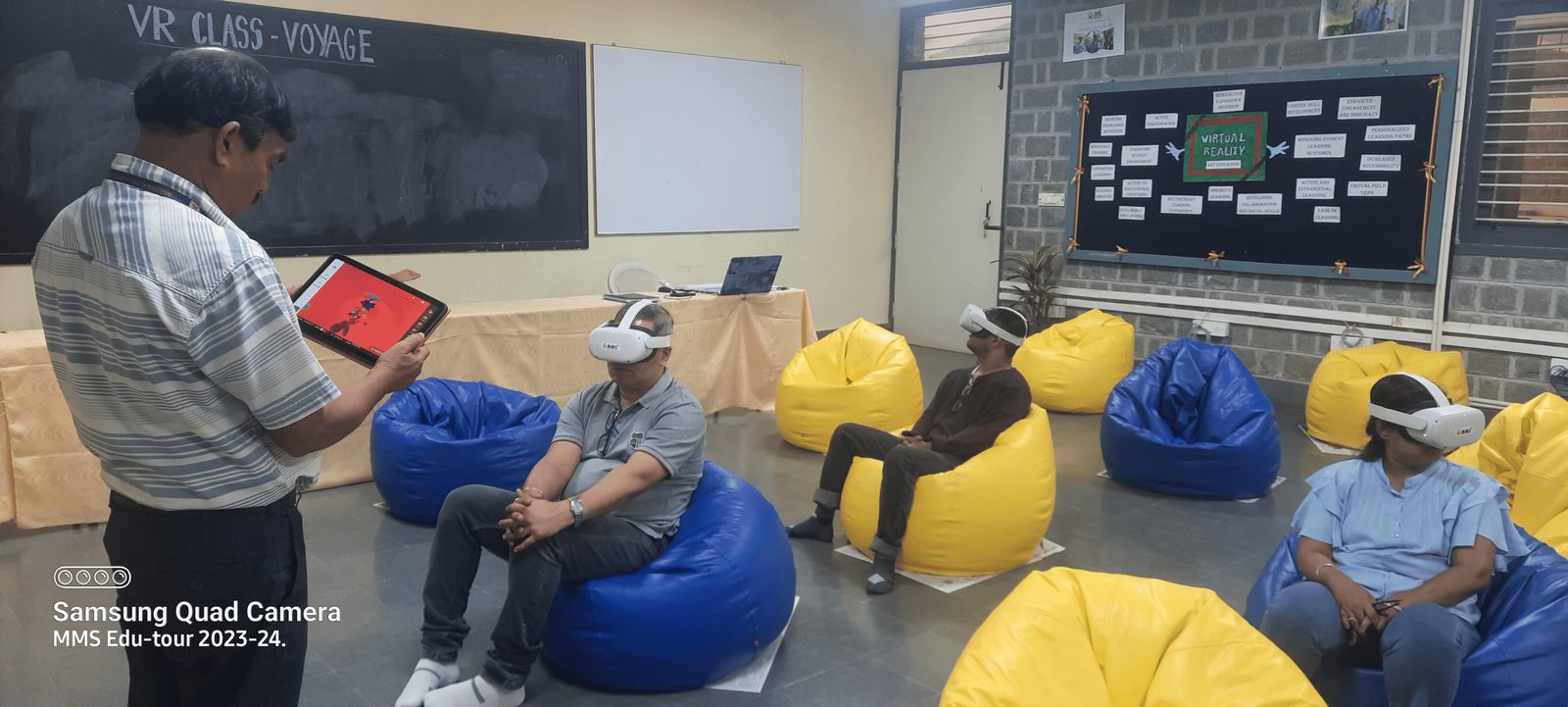
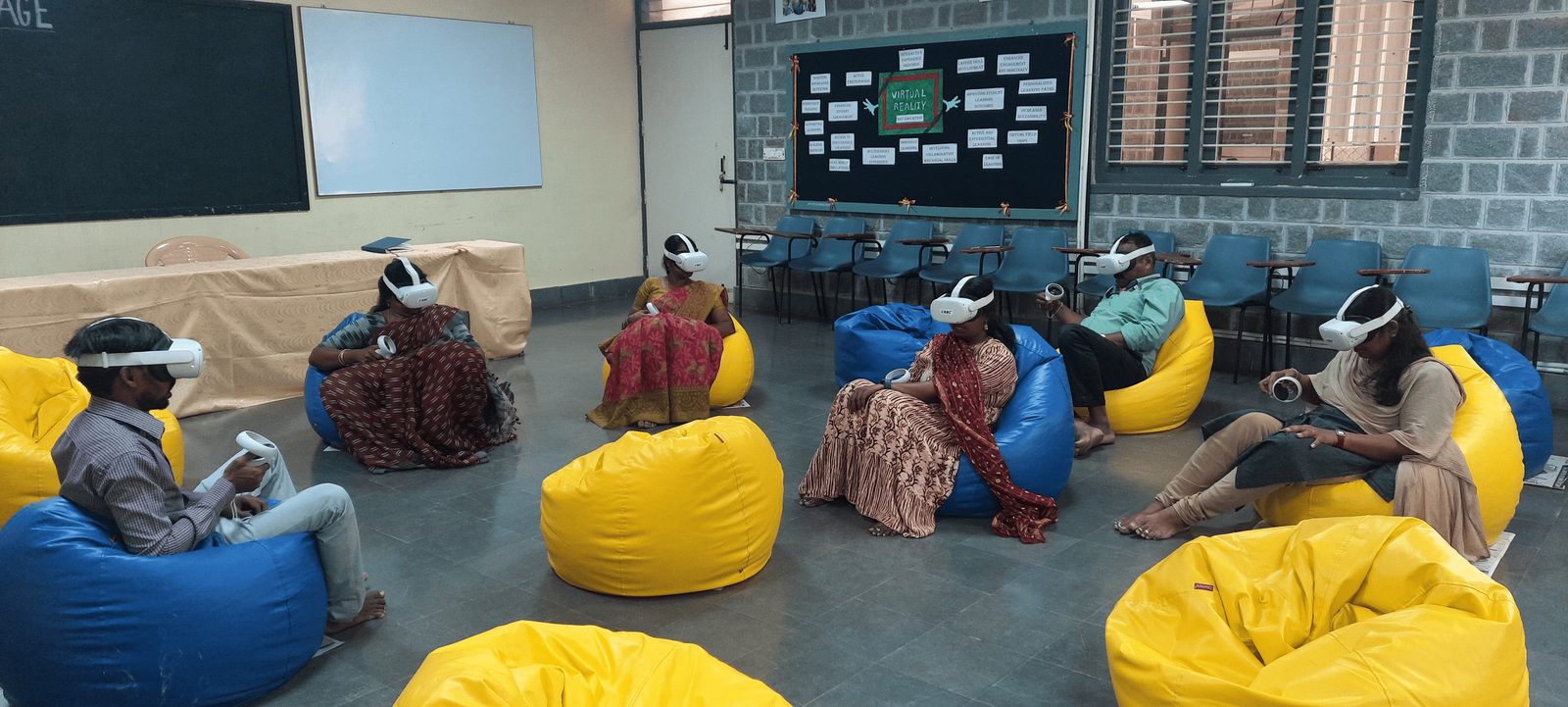
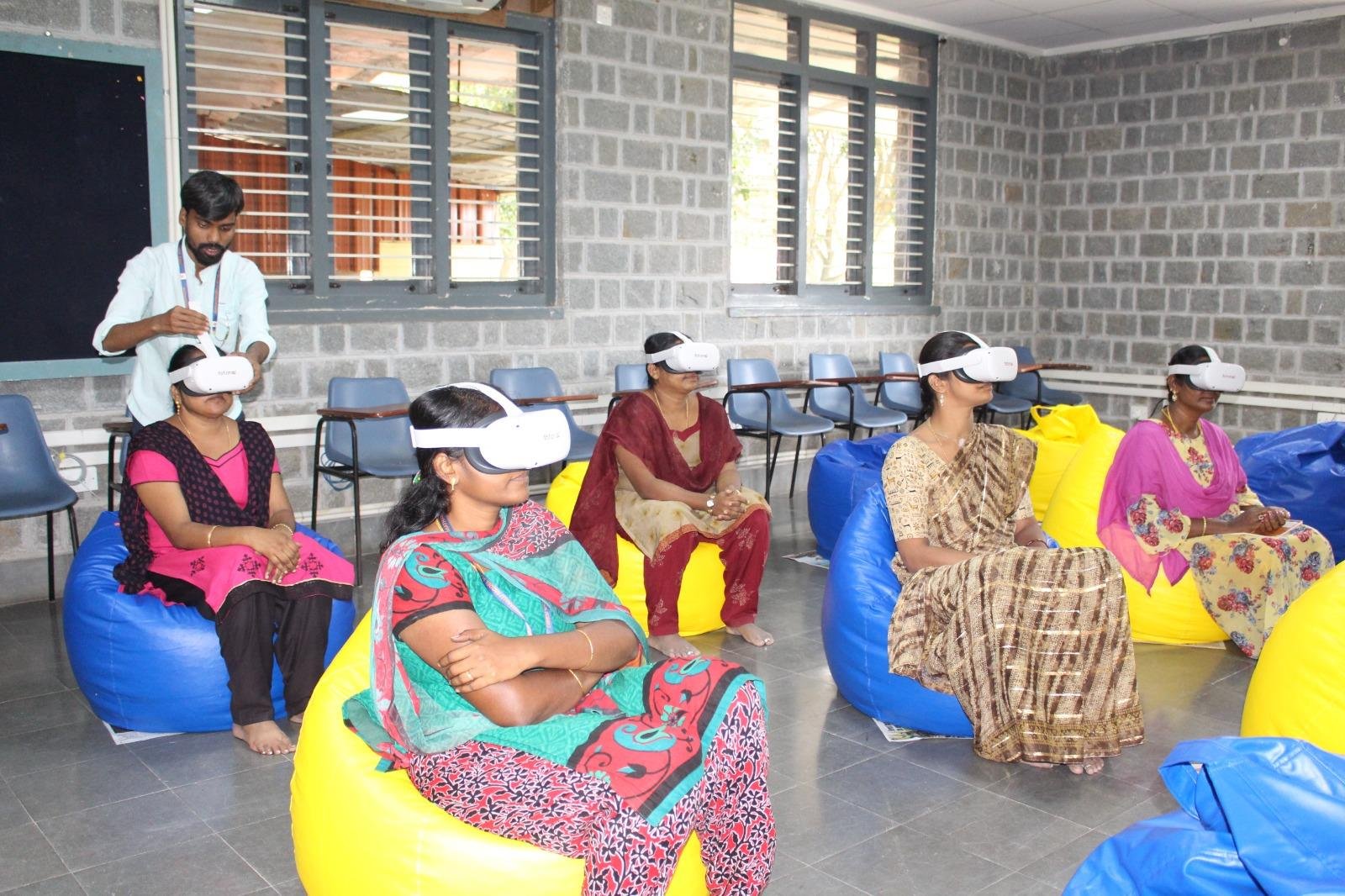
The VR Lab now runs full VR headset sessions for students across every grade, alongside regular staff training so every teacher can bring VR into their own classroom.
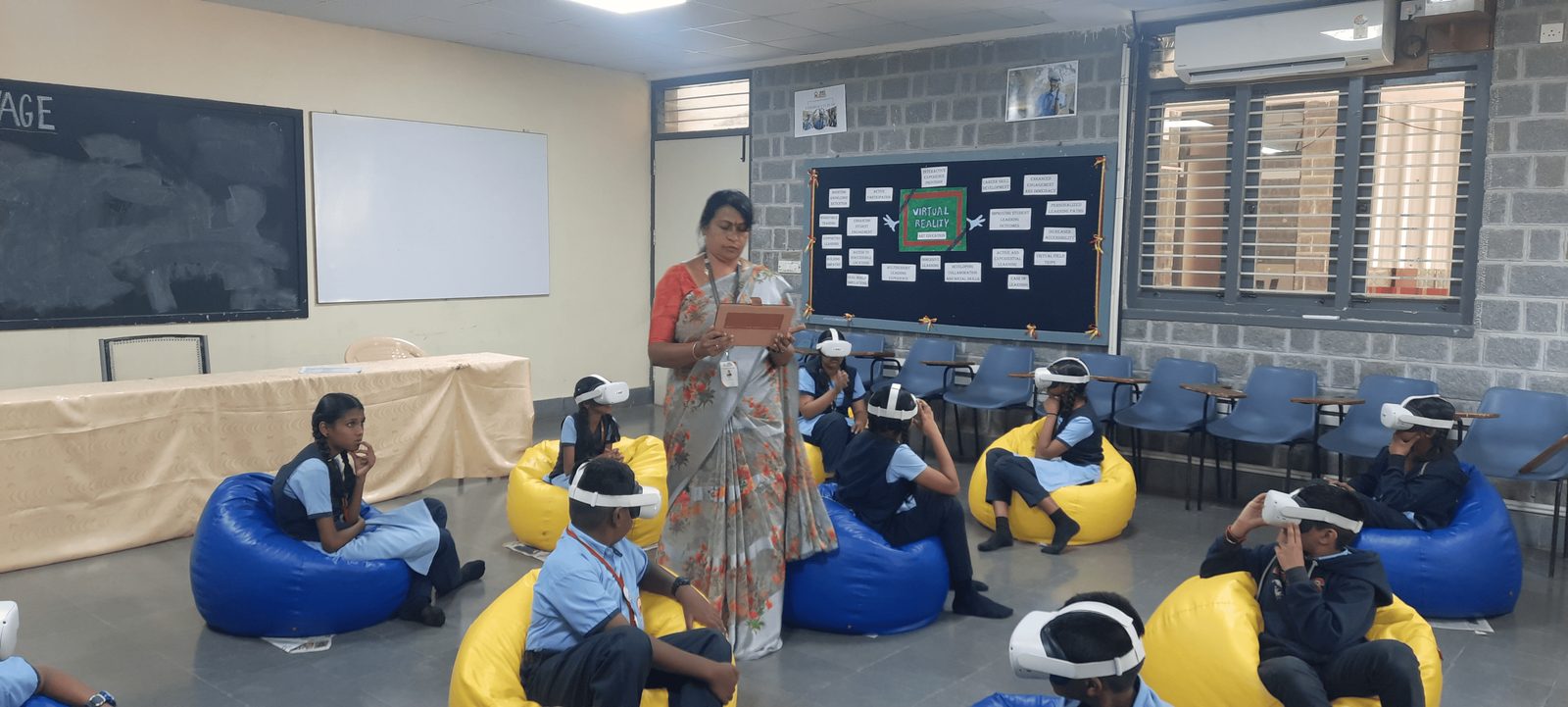
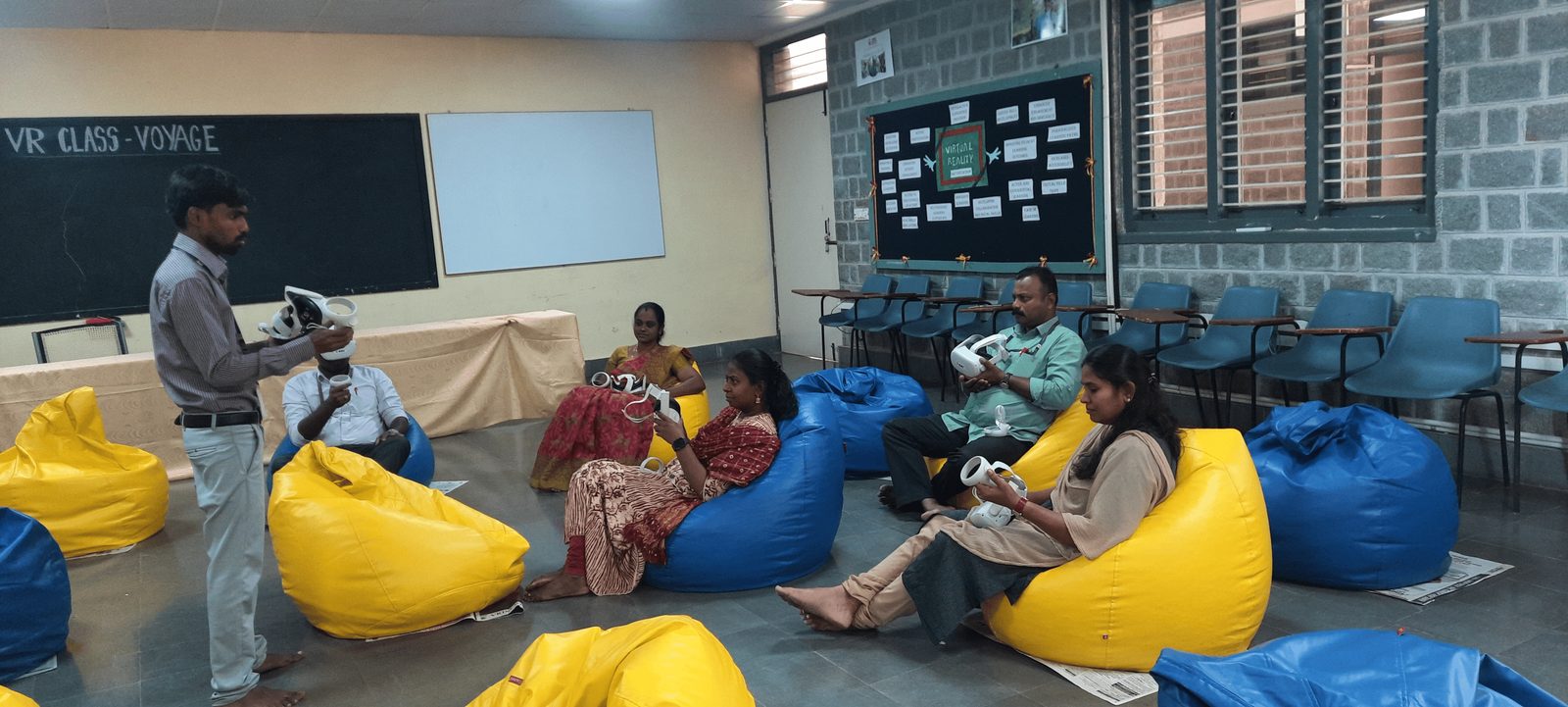
Students using Meta Quest VR headsets in the VR Lab MMS staff trying VR headsets during a training session MMS staff exploring a VR class voyage together Teacher demonstrating the VR app on a tablet during staff training
Gallery

Pictures from the VR Lab

Beyond the Syllabus

The VR Lab is not only for subjects

Alongside NCERT curriculum simulations, the VR Lab is a space for experiences students could not otherwise have on campus.

🚀

Space Exploration

Walking through the International Space Station and exploring the solar system in full virtual reality.

🔥

Fire Extinguisher Training

Practicing fire safety and extinguisher use in a realistic simulation, with zero real world risk.

🦖

Robot Dog, Piece by Piece

Assembling and dismantling a virtual robot dog to learn what is inside it and how each part works.

💃

VR Robot Dance

Choreographing and performing a dance routine together with a virtual robot partner.

🚀

Paper Rocket to Real Flight

Starting with a simple paper rocket model and building up to a full virtual rocket launch experience.

🎨

Immersive Drawing

Art integration in the VR Lab, painting and sculpting in three dimensional virtual space, already introduced to students as part of the VR classroom sessions. Full details and more photos coming soon.

Activities

What happens in the VR Lab

Loading activities…
Events

Events linked to this lab

Loading events…
👤
Photo to be added by MMS
In-charge's Note

[In-charge's note to be added by MMS]

[Lab In-charge Name to be added by MMS] In-charge, VR Lab

This section is reserved for the VR Lab in-charge's name, photograph, and note, to be added through the site's content editor at any time.

Curriculum

Aligned with the CBSE curriculum

VR Lab content is mapped chapter by chapter to the CBSE/NCERT curriculum, from Pre-Primary through Grade 12. Immersive VR modules put students inside a concept for guided classroom sessions, while interactive AR modules let them manipulate a model on a tablet or phone individually. Together they cover Maths, Science, Social Science, English, Hindi and EVS.

Pre-Primary to Grade 12 9 Subject Areas 1,000+ VR & AR Concepts
Pre-PrimaryNursery · LKG · UKG

Foundational AR and VR modules that build first concepts through comparison, play and everyday observation.

Maths

Let's Compare (near/far, big/small, more/less) Counting Numbers 1 to 100 Odd and Even Numbers Simple Addition & Subtraction Lines and Curves Greater Than, Less Than and Equals To

English

Alphabets and Vowels Animal Kingdom & Animal Sounds Word Magic (two and three letter words) Phonics Fun Musical Instruments

EVS & GK

Our Solar System Our Seasons The Water Cycle Parts of the Plant & Plant Germination National Symbols of India Good Touch and Bad Touch Awareness Landforms and Living/Non-Living Things

Hindi (UKG)

Hindi Swar and Vyanjan Hindi Word Safari Hindi Matra
Grades 1 to 5Primary

Everyday concepts brought to life, from shapes and animals to India's rivers and the water cycle.

Maths

Numbers & Shapes Taller and Shorter Patterns and Lines Clock Reading Perimeter and Area Angles: Different Views of Objects

Science & EVS

Super Senses Seeds and Seed Dispersal Water: Storage, Uses and Forms A Space Shuttle Launching Classification of Animals Water Pollution: Reasons and Solutions A Process of Cultivation

Social Science

My Delhi: Famous Places Our India: Rivers, States and Neighbours Our World: Continents and Oceans World Map & Geographic Coordinate System

English & Hindi

Tenses & Sentence Building Articles, Pronouns and Conjunctions Vehicles and Transport Vikari Shabd & Sanyojak Shabd
Grades 6 to 8Middle School

Core NCERT Science and Maths chapters, alongside History and Geography from ancient empires to plate tectonics.

Science

Getting to Know Plants Electricity and Circuits Fun with Magnets Air Around Us Acids, Bases and Salts Force and Pressure, Friction Sound Cell: Structure and Functions Crop Production and Management Light & the Human Eye Stars and the Solar System Reaching the Age of Adolescence

Maths

Basic Geometrical Ideas Integers, Fractions and Decimals Understanding Elementary Shapes Algebra: Variable and Expression Lines and Angles Understanding Quadrilaterals Exponents and Powers

History & Geography

The Mauryan Empire & Ashoka Indus Valley Civilization The Mughal Empire Bhakti and Sufi Movements Arrival of the Europeans & East India Company Revolt of 1857 Globe: Latitudes and Longitudes The Earth's Interior & Volcanoes Global Warming Tides and the Water Cycle
Grades 9 & 10Secondary

The full CBSE board-year Science and Maths syllabus, plus History and Geography through to modern India.

Science

Matter in Our Surroundings Atoms and Molecules Structure of the Atom Tissues & Diversity in Living Organisms Force and Laws of Motion Gravitation & Work and Energy Chemical Reactions and Equations Acids, Bases and Salts Metals and Non-metals Carbon and Its Compounds Life Processes & Control and Coordination Heredity and Evolution Light: Reflection and Refraction The Human Eye and the Colourful World Electricity & Magnetic Effects of Current Sources of Energy & Our Environment

Maths

Circles & Cyclic Quadrilaterals Introduction to Trigonometry Some Applications of Trigonometry Areas Related to Circles Introduction to Euclid's Geometry

History & Geography

Nationalism in India (Dandi March, Quit India) French Revolution American Revolution World War I & World War II Rise and Fall of Empires (Alexander, Genghis Khan) Physical Features of India & Drainage Resources and Development Water Resources & Rainwater Harvesting Manufacturing Industries
Grades 11 & 12Senior Secondary

Advanced Biology, Chemistry, Physics and Maths visualisation for board and competitive exam preparation.

Biology

Biological Classification Morphology & Anatomy of Flowering Plants Cell Structure and Function Cell Cycle and Cell Division Sexual Reproduction in Flowering Plants Principles of Inheritance and Variation Molecular Basis of Inheritance Human Health and Disease Biotechnology: Principle and Process

Chemistry

Structure of Atom & Chemical Bonding Thermodynamics & Equilibrium Organic Chemistry: Hydrocarbons Electrochemistry Haloalkanes and Haloarenes Alcohols, Phenols and Ethers Aldehydes, Ketones and Carboxylic Acids Amines & Biomolecules Solutions

Physics

Gravitation & Kepler's Law Thermodynamics: Carnot Engine Electric Charges and Fields Current Electricity & Wheatstone Bridge Dual Nature of Radiation and Matter Atoms: Atomic Spectra Semiconductor Electronics

Maths

Straight Lines & Conic Sections Introduction to Three-Dimensional Geometry Vector Algebra

The lists above are a representative sample of the full VR and AR concept catalogue used to plan classroom sessions. Teachers at the Centre of Excellence can pull the complete chapter-and-concept mapping for any grade on request.

Science, Without the Risk

Curriculum experiments, run safely in VR

Many of the chemistry, physics and biology chapters above involve experiments that are hazardous, expensive, or hard to repeat for every student on a real bench. Inside the VR Lab, students run the same experiments as many times as it takes to understand them, with no risk of burns, fumes, breakage or injury. This happens alongside, not instead of, hands-on time in the Centre of Excellence's own Science Lab.

🧪

Chemistry without the hazards

Acid-base neutralization, the combustion of magnesium ribbon, and metal displacement reactions, watched up close with no risk of burns, fumes or broken glassware.

⚡

Physics made visible

Electric circuits, electroplating, and the working of a galvanic cell, seen from the inside instead of a single diagram on a textbook page.

🫀

Biology up close

The structure of the human heart, the frog reproductive system and the stages of cell division, explored in full 3D rather than on a single dissection tray.

📺

On the smart board too

Selected models (a full 3D animal cell, for instance) come to the classroom smart board as well, so the whole class can point, rotate and explore together. This is exactly how Pre-Primary to Grade 7 classes experience VR Lab content, as a shared flat-screen session, headset or not.

In Their Words

What students, parents and visitors say

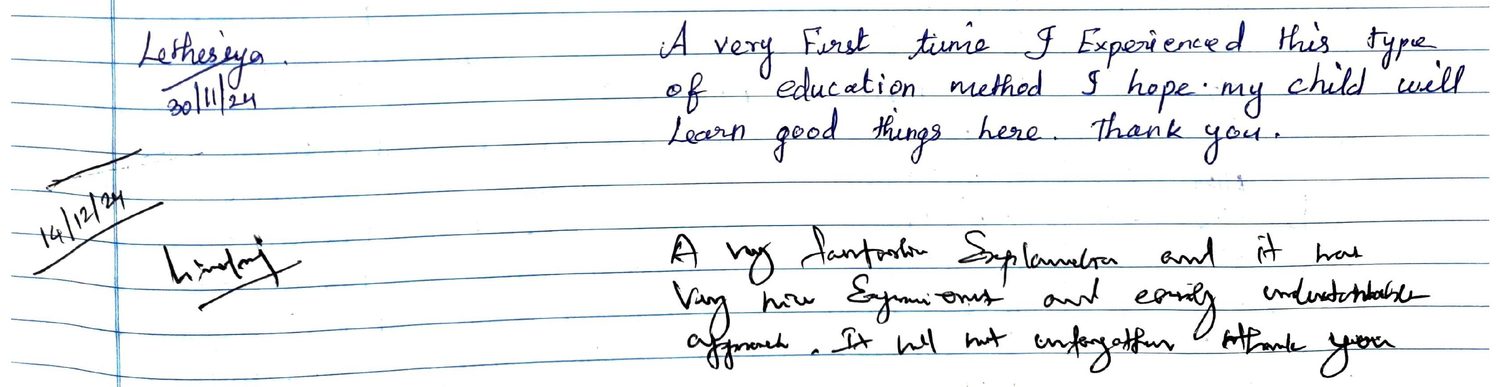
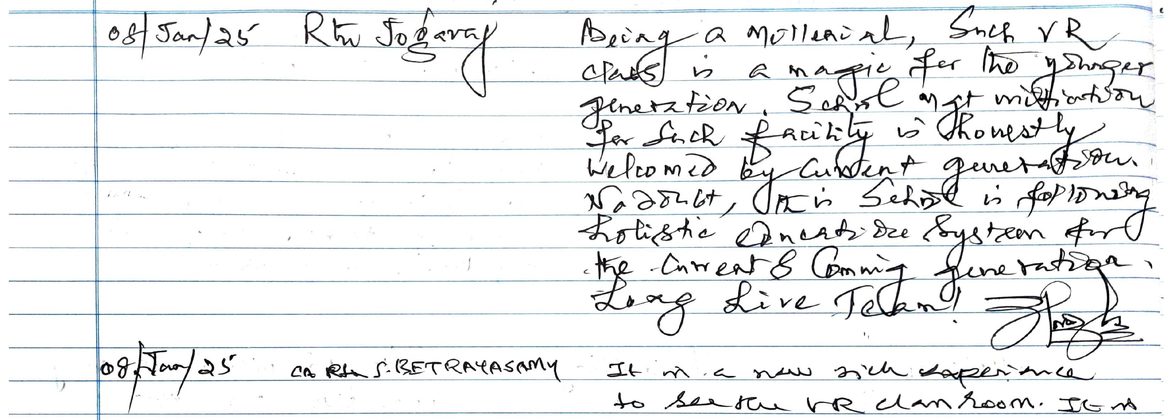
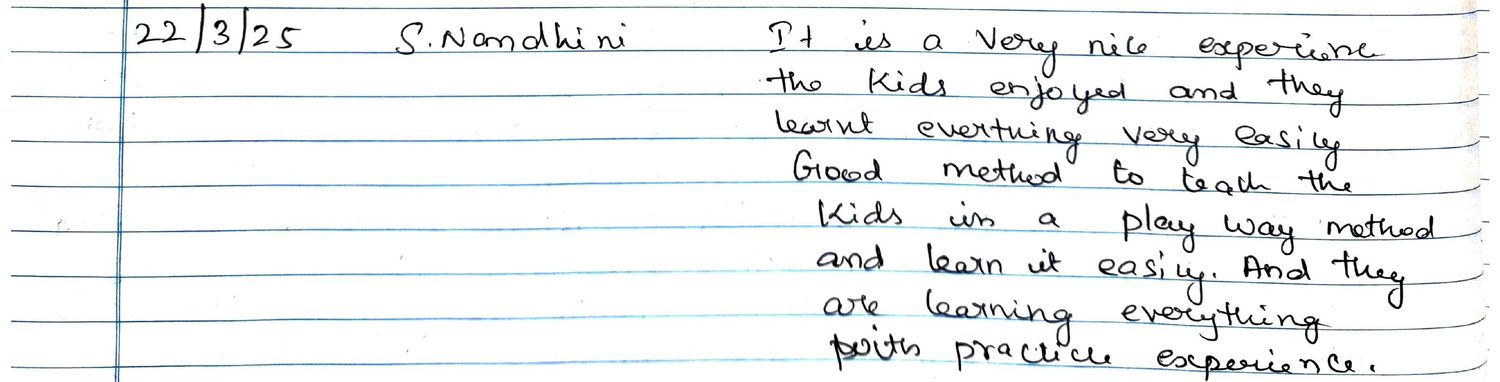
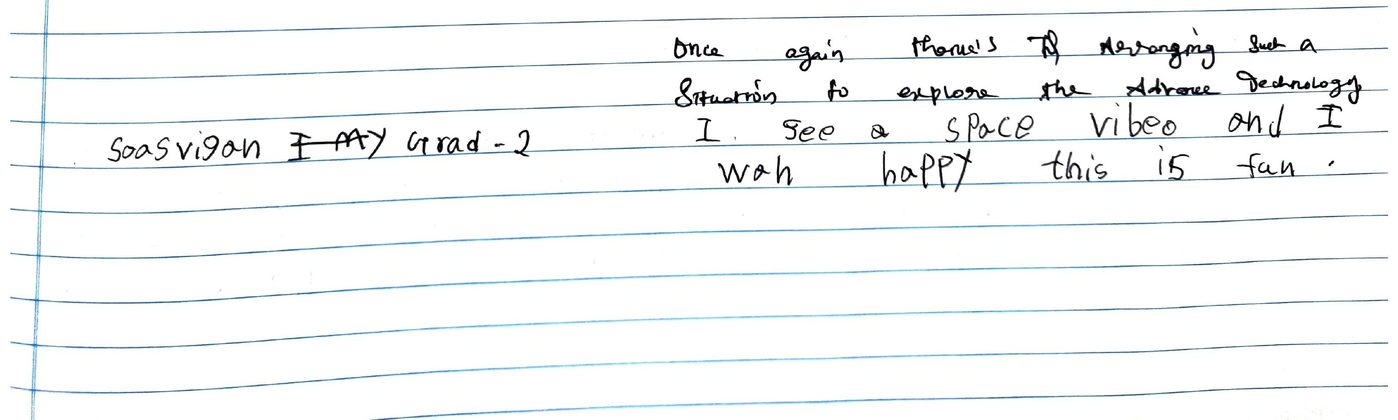
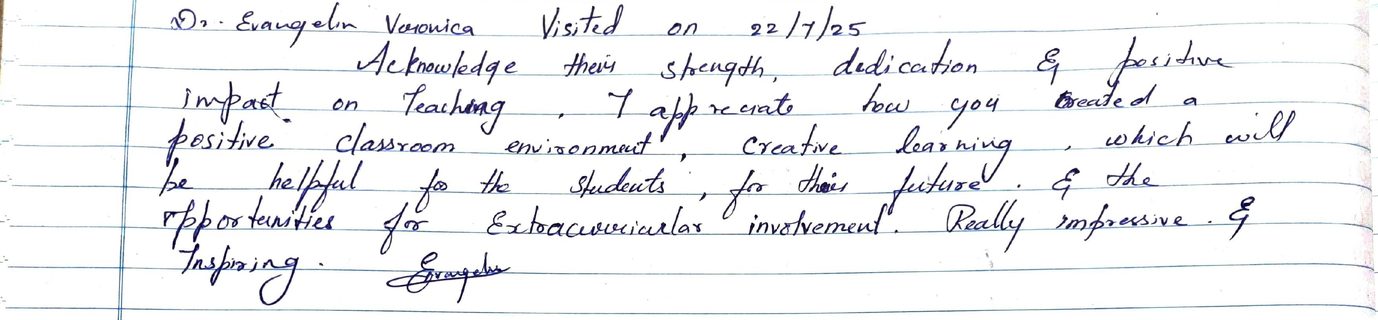
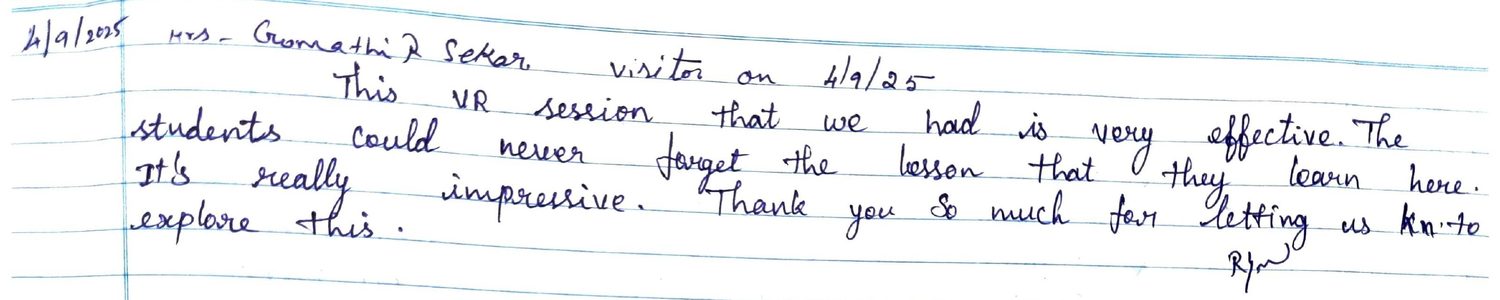
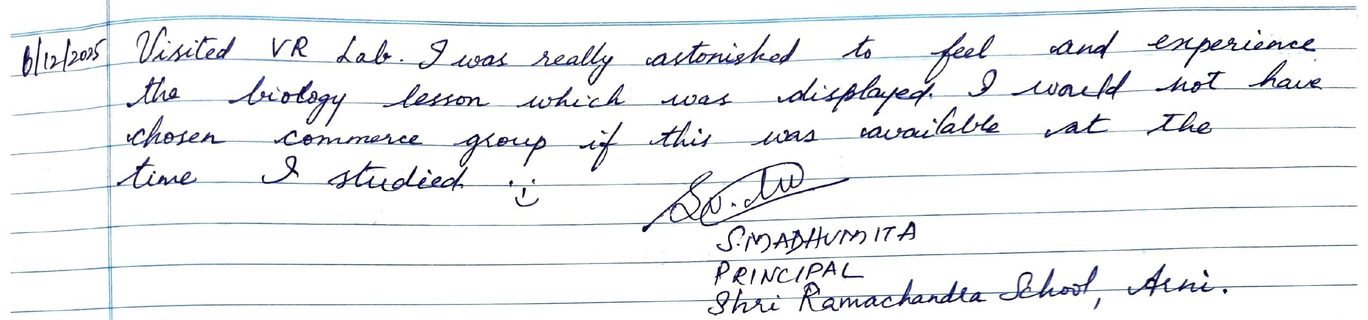
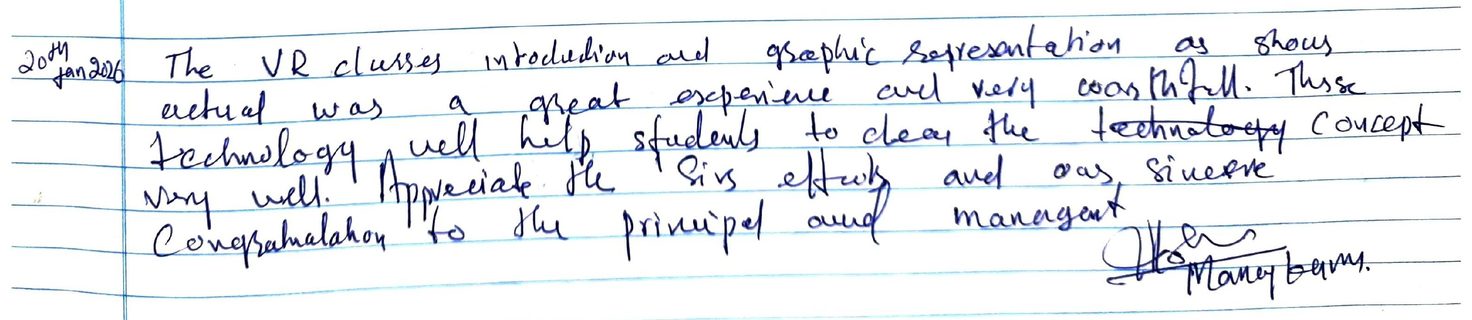
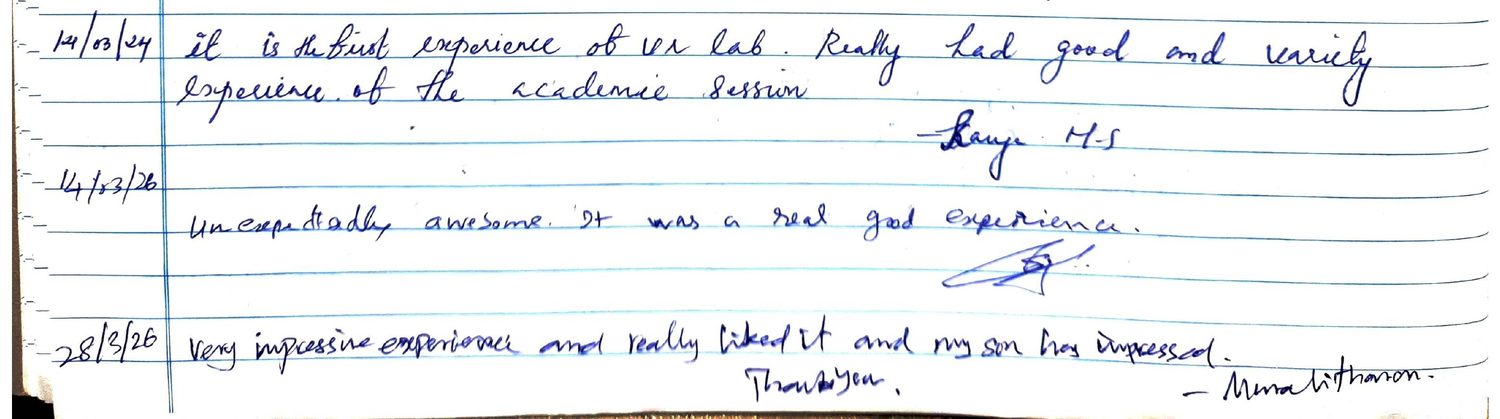
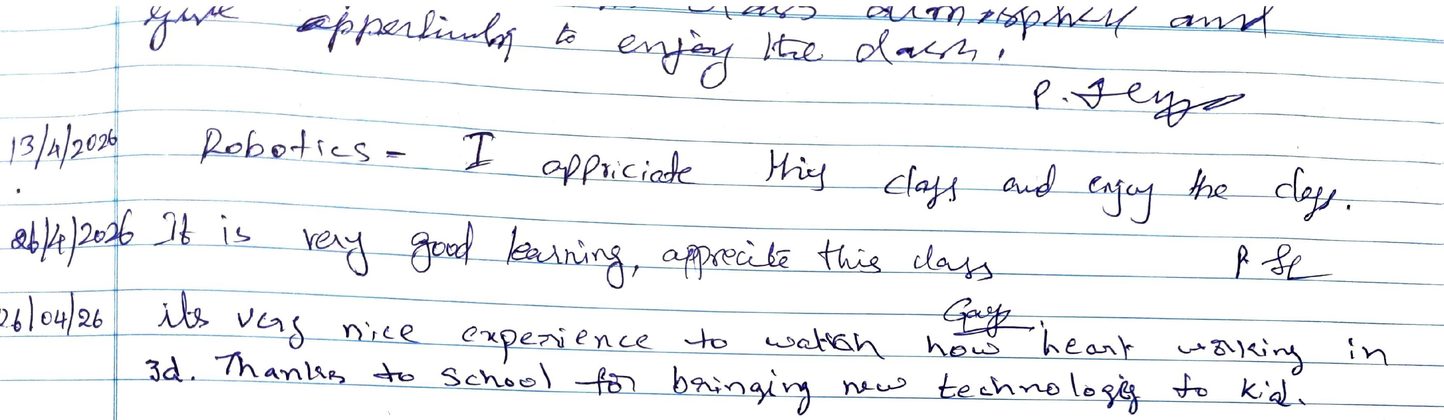
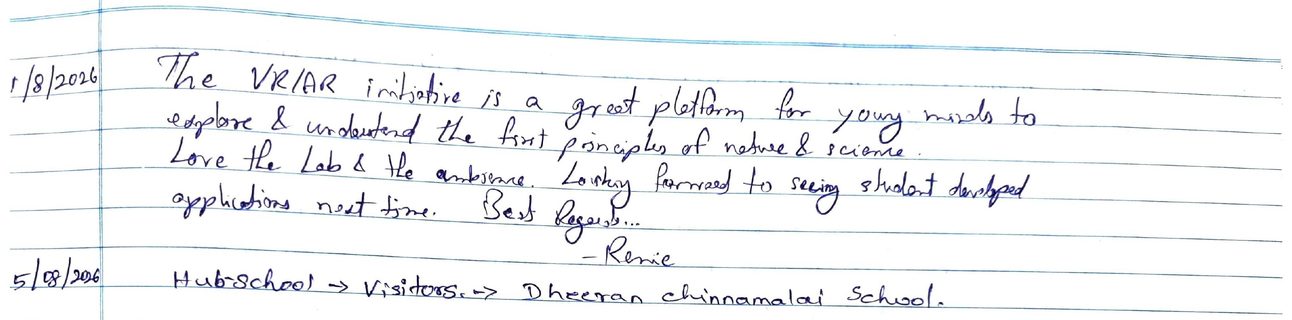
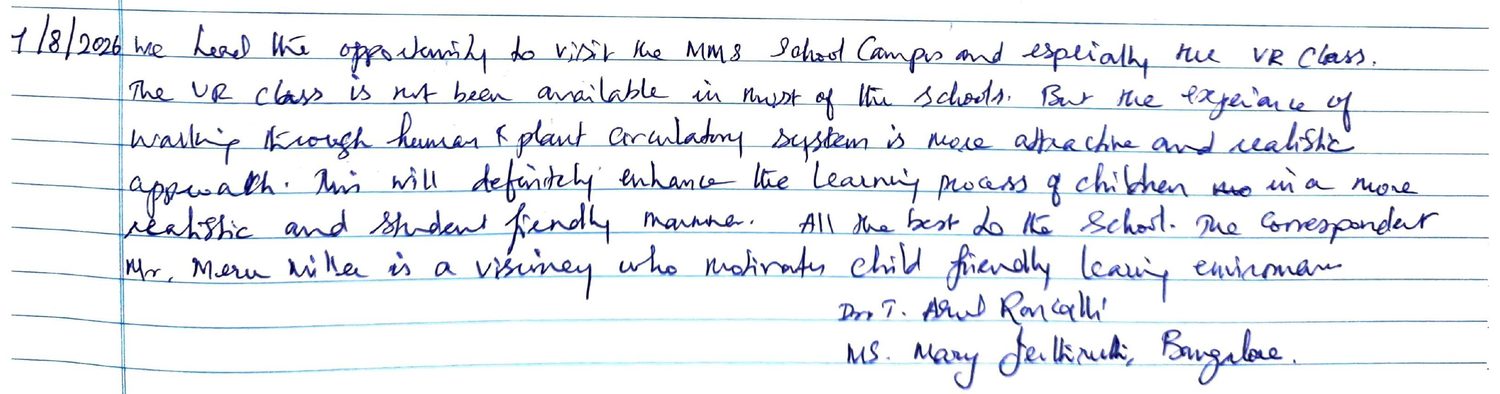
Pages from the VR Lab's own visitor feedback book, in the handwriting of the students, parents, teachers and guests who wrote them. Hover any note to pause and read it.

Handwritten VR Lab feedback note

Explore the other labs.

Eleven labs, one integrated ecosystem.

Back to The Labs →
⚠
Safety & Platform Policy

Meta Quest headsets: for learners aged 13 and above

The VR Lab's headset stations run on Meta Quest 2. In line with Meta Quest's own platform account policy, Meta Quest headset sessions at the Centre of Excellence are available only to learners aged 13 years and older, broadly Grade 8 and above.

This is a hardware and platform-level requirement, not a limit on who gets to learn. Pre-Primary through Grade 7 learners experience the very same VR Lab curriculum through two formats built for their age group: Augmented Reality sessions on tablets and phones, where each student explores a 3D model on their own screen, and flat-screen or projector 360° video sessions, where the whole class experiences VR content together without wearing a headset.

Meta Quest headset · Grade 8 and above (age 13+) Augmented Reality on tablets · Pre-Primary to Grade 7 Flat-screen / projector 360° sessions · All grades

This age requirement applies to who wears the headset, not just who owns the sign-in: Meta's own guidance for shared and institutional Quest use asks every wearer to be old enough for the account in use, and Meta's Quest-for-Education program itself is offered only to institutions whose students are 13 and above. Parents, guardians and teaching staff are responsible for supervising headset access and ensuring it is used only by learners who meet this requirement. Session formats are assigned by age group so that no learner misses out on the VR Lab curriculum.

Meta Quest headsets: for learners aged 13 and above only, per Meta Quest platform policy Pre-Primary to Grade 7 learners experience the VR Lab through Augmented Reality on tablets and flat-screen 360° sessions Parents, guardians and staff are responsible for supervising headset access and age compliance Meta Quest headsets: for learners aged 13 and above only, per Meta Quest platform policy Pre-Primary to Grade 7 learners experience the VR Lab through Augmented Reality on tablets and flat-screen 360° sessions Parents, guardians and staff are responsible for supervising headset access and age compliance
Rate & Review